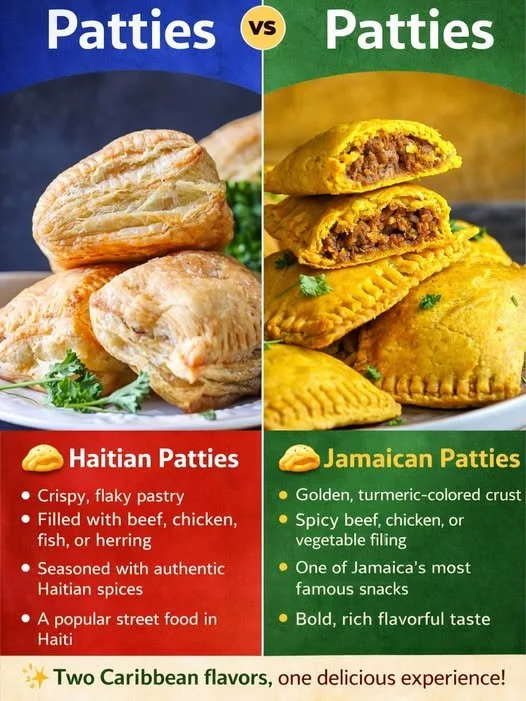
Patties & Pastries — A Rich Diasporic Tapestry of Handheld Delights
Empanadas & Patties: How One Movie, One Food Truck, and a Lifetime of Cravings Shaped My Pastry Story
Written by Chef Ayana Gwendolyn Chung
Cooking With Ayana LLC
If you’ve been with me for a while, you know I don’t just cook food—I chase memories. I chase that feeling of walking down a New York block and smelling something so good it stops you mid-step. I chase the warmth of a patty burning the roof of your mouth (you know the struggle) and the comfort of watching a woman rebuild her entire life through a pot of oil and a tray of empanadas.
This is the story of how a movie, a Queens immigrant mom, NYC streets, and my own Caribbean/Guyanese/Jamaican roots pushed me to create my own version of empanadas and patties—and how all of these little half-moons of dough are actually talking to each other across the diaspora.
The Movie That Sparked My “I Can Do This Too” Moment
One day, I was home watching TV and stumbled onto a movie that felt like it was tugging on my heartstrings and my taste buds at the same time.
The main character was a Hispanic mom who had immigrated to Queens. She had two small children, a husband who ended up leaving them, and suddenly she was a single mother staring down eviction and no income. No safety net. No “Plan B.” Just pressure.
And what did she turn to?
Not a miracle. Not a lottery ticket.
She turned to her ancestral rootz.
She started making Colombian empanadas—the ones she grew up on, learned at her mother’s side—and began selling them. At first it was tiny: neighbors, church folks, people in the building. But eventually, her little pockets of love became her survival plan. Those empanadas transformed from “just food” into rent money, school shoes, and hope.
I remember sitting there, eyes glued to the screen, thinking:
“Wow. Look at that. When everything fell apart, she went back to her food. To what her ancestors taught her. And it saved her.”
As soon as the credits rolled, I felt it—that itch in my spirit. I didn’t have a written recipe. I didn’t pause the movie to take notes. I just held onto the scenes and the feelings. I walked into my kitchen, pulled out what I had, and instinctively started making my own version of empanadas/patties based on memory alone.
Those first creations—the ones you see photoed below on my blog—were born straight from that movie, from that mother’s resilience, and from my own deep need to connect food with survival and dignity.
Atlantic Terminal: The Empanada Truck That Raised Me
Long before that movie, though, empanadas had already claimed a piece of my heart.
As a high school girl in NYC, Atlantic Terminal was one of my stomping grounds. Right outside the station, there was this empanada truck that felt like heaven on wheels. I still remember the spinach and beef empanadas, the cheese, and the plain spinach ones—those were always my go-tos.
The dough was just the right thickness, blistered in all the right places. The fillings were seasoned properly—no shortcuts, no bland bites. I’d save my little bit of lunch money just to make sure I could go there. That truck knew me. They might not have known my name, but they knew my face and my order.
Those empanadas became part of my personal New York story, just like dollar cabs, train delays, and corner-store snacks.
Fordham Road: Pastelitos, Bronx-Style
Later, when life took me up to the Bronx, my empanada world only expanded.
If you’ve ever walked down Fordham Road, you know what I’m talking about: street carts from the Dominican Republic and Puerto Rico lined up all over the sidewalks. Steam coming out of metal trays, heat lamps glowing, pastelitos piled high like golden little envelopes stuffed with joy.
I fell deep in love with those pastelitos—their shape, their flakiness, that first crunchy bite. And listen, I have a preference:
I love when the meat is ground instead of shredded.
Shredded meat can be delicious, but to me, ground meat locks in the flavor differently. The spices cling to every little crumb, the juices distribute more evenly, and the bite feels more cohesive. Every pastelito from those Bronx carts carried a piece of Dominican and Puerto Rican home cooking right there in paper napkins on the sidewalk.
Jamaican Beef Patties: Risking It All for That First Bite
Of course, before all of that—before empanada trucks and Bronx pastelitos—patties were already in my blood.
Being Caribbean—Guyanese, Jamaican, and more—I grew up on the beloved Jamaican beef patty with that bright yellow crust you can spot from across a room. There is nothing subtle about a Jamaican patty. It’s loud, proud, and unapologetic.
I loved:
Silver Crust
All the little mom-and-pop Jamrock restaurants
And of course, Golden Krust
But here’s the thing about Jamaican patties that every real patty-lover knows:
Eating one fresh out the oven is a dangerous sport.
Those shop signs that say, “Careful, contents are super hot!” are not playing. And yet, did we listen? No.
We’d:
barely blow on it,
crack that crust open the tiniest bit,
then take a HUGE bite anyway.
And instantly regret it—but keep chewing.
Your tongue screaming, the roof of your mouth literally peeling, and you’re there like, “It’s fine, it’s fine,” while your eyes water.
That’s the shared trauma and joy of Jamaican patties. It’s a rite of passage.
Guyanese Patties: The Cocktail-Sized Powerhouses
Beyond Jamaican patties, my Guyanese side introduced me to yet another cousin in this filled-pastry family: Guyanese patties.
What always stood out to me was:
The different dough texture—less like the flaky Jamaican crust, more tender and sometimes layered differently.
The filling: I noticed vegetables like peas mixed into the ground meat. It was never just meat alone; it always felt like a whole little ecosystem of flavors in there.
And the size—those cocktail patties?
Tiny, almost bite-sized, but they pack a serious wallop. Perfect for parties, wakes, church functions—anywhere Guyanese people gather, a tray of those is getting passed around. You think you’ll eat “just one,” and suddenly you’ve had six.
Haitian Patties: Love at First Bite
Then there are the Haitian patties—listen, I LOVEEEEEE them.
The first time I remember having one, I was a pre-teen. A Haitian-American suitor of my mom’s came around one day with a bag of them, still warm. I bit into that pastry and felt my life change a little.
The crust was incredibly flaky, almost like a cross between a patty and a French pastry. The fillings were seasoned differently from what I knew—complex, layered, soulful. You could taste thyme, cloves, maybe a little epis in there. It was familiar, but also brand new.
Fast forward to my South Florida era:
There, Foodtown became one of our go-to spots. And the Haitian patties? Front and center. Morning runs meant fresh patties—fish, beef, and more—reflecting exactly who lived in that neighborhood and who shopped there. The bakery section mirrored the diaspora in real time.
I’d start my mornings with a warm Haitian patty and feel like I was eating a map of the Caribbean in pastry form.
NYC: A City of Patties, Empanadas & Hand Pies
One thing I adore about New York City is that at almost any hour, on almost any day, you can put your hand on some kind of patty, empanada, or pastelito.
Jamaican patties in Flatbush and Crown Heights.
Dominican pastelitos in the Bronx.
Colombian and Mexican empanadas in Queens.
Haitian patties in Brooklyn and South Florida.
Guyanese cocktail patties at every family function.
Each one has:
a different dough,
a different fat source,
a different spice profile,
a different story.
Yet they’re all trying to solve the same problem:
“How do we take what we have—ground meat, a little veg, some spices, some flour—and turn it into something portable, filling, affordable, and full of soul?”
From Watching to Doing: My Own Empanada/Pattie Creation
So when I watched that movie about the Colombian mom in Queens turning her empanadas into lifelines, something clicked.
I looked at:
that Atlantic Terminal food truck that fed me in high school,
those Fordham Road pastelito carts in the Bronx,
the Jamaican beef patties that burned the roof of my mouth,
the Guyanese cocktail patties loaded with peas,
the Haitian patties that made me fall in love as a pre-teen,
and I realized:
These are all part of the same conversation.
They’re talking about:
survival,
migration,
making the best out of the least,
turning struggle into flavor.
So I did what I always do when something moves me:
I went into my kitchen and cooked my feelings.
With no written recipe, just the visual memory from that movie and a lifetime of eating patties and empanadas in this city, I built my own version:
My fold,
My seasoning profile,
My dough feel.
Those are the ones you’ll see in the photos below—my tribute to every woman, every family, every vendor who turned dough and filling into a lifeline.
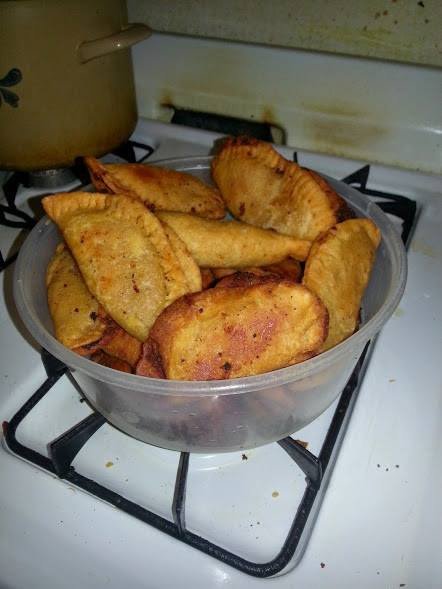
My first try at Empanadas
One Pastry, Many Homelands
Empanadas. Patties. Pastelitos. Haitian patties. Guyanese cocktail patties.
Different names. Different languages. Different islands and countries.
But when you bite into them, you taste:
resourcefulness,
ancestral skill,
love under pressure,
the hustle of survival and the luxury of comfort—all in one.
For me, every time I sink my teeth into one of these, I’m not just eating a snack.
I’m tasting Atlantic Terminal, Fordham Road, Flatbush, South Florida, Queens, Jamaica, Guyana, Haiti, Colombia, and my own kitchen—all at once.
And that’s the magic of the diaspora:
we might fold our dough differently, but we’re all wrapping our stories in it.
Hungry for heritage?
This is it—right here in the palm of your hand.
Handheld pastries across the diaspora tell stories of migration, colonization, cultural fusion, and identity. These savory and sometimes sweet pastries serve as tasty symbols of community resilience and culinary evolution.
### Empanadas (Colombia)
Colombian *empanadas* are crispy, delightful turnovers usually made from corn-based dough and stuffed with seasoned meats, potatoes, or cheese. Popular as street food and party snacks, empanadas represent Indigenous and Spanish culinary legacies, adapted to local tastes and ingredients. The golden crust, fried to perfection, holds flavors deeply rooted in regional spices and family recipes.
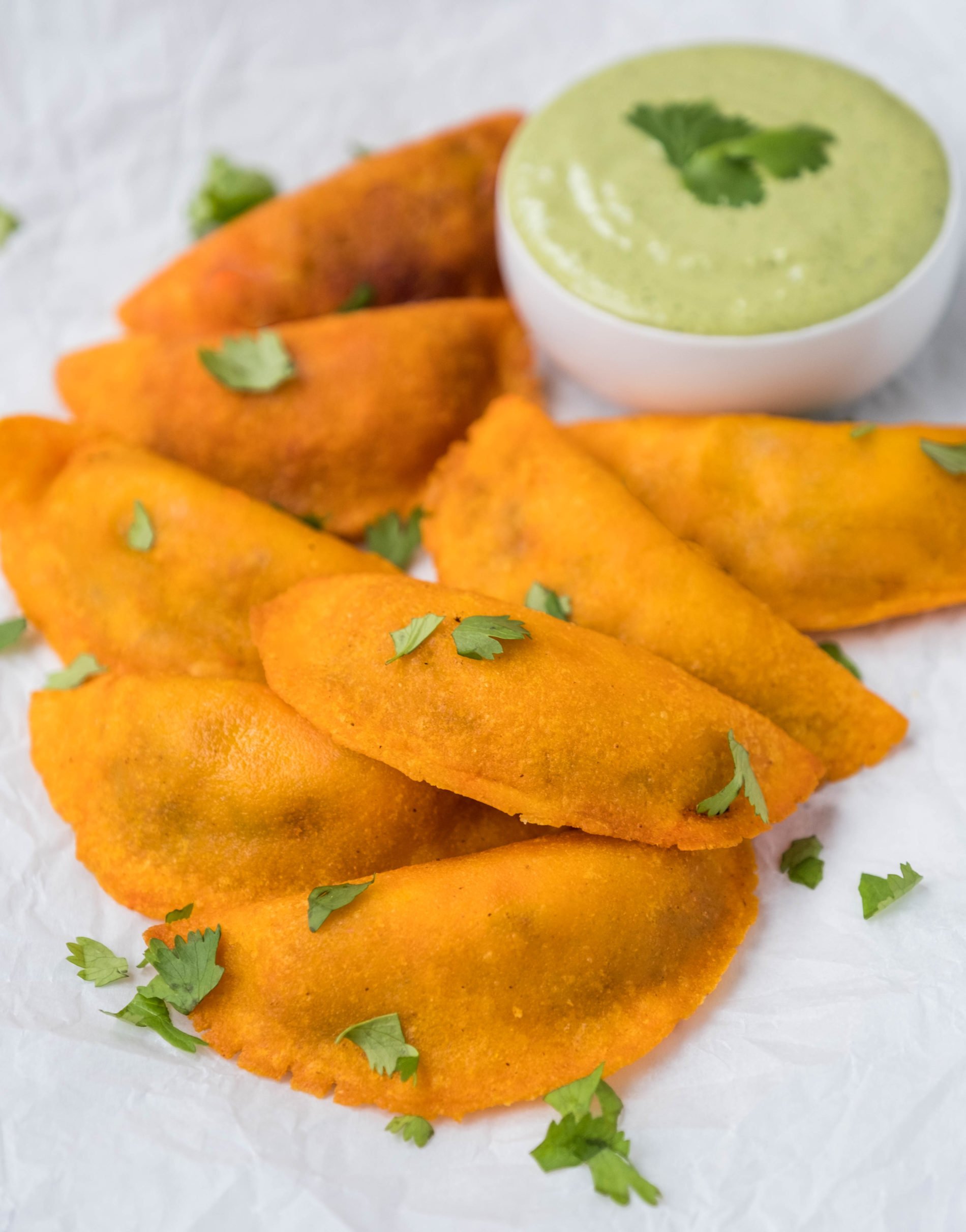
### Pastelitos (Puerto Rico and the Dominican Republic)
In Puerto Rico and the Dominican Republic, *pastelitos* are flaky, often baked or fried pastries encasing spiced fillings—ranging from ground beef and chicken to seafood or cheese. These treats find their way to festivals, family gatherings, and street markets, bridging tastes and traditions with Spanish empanada inspirations modulated by Afro-Caribbean influences.
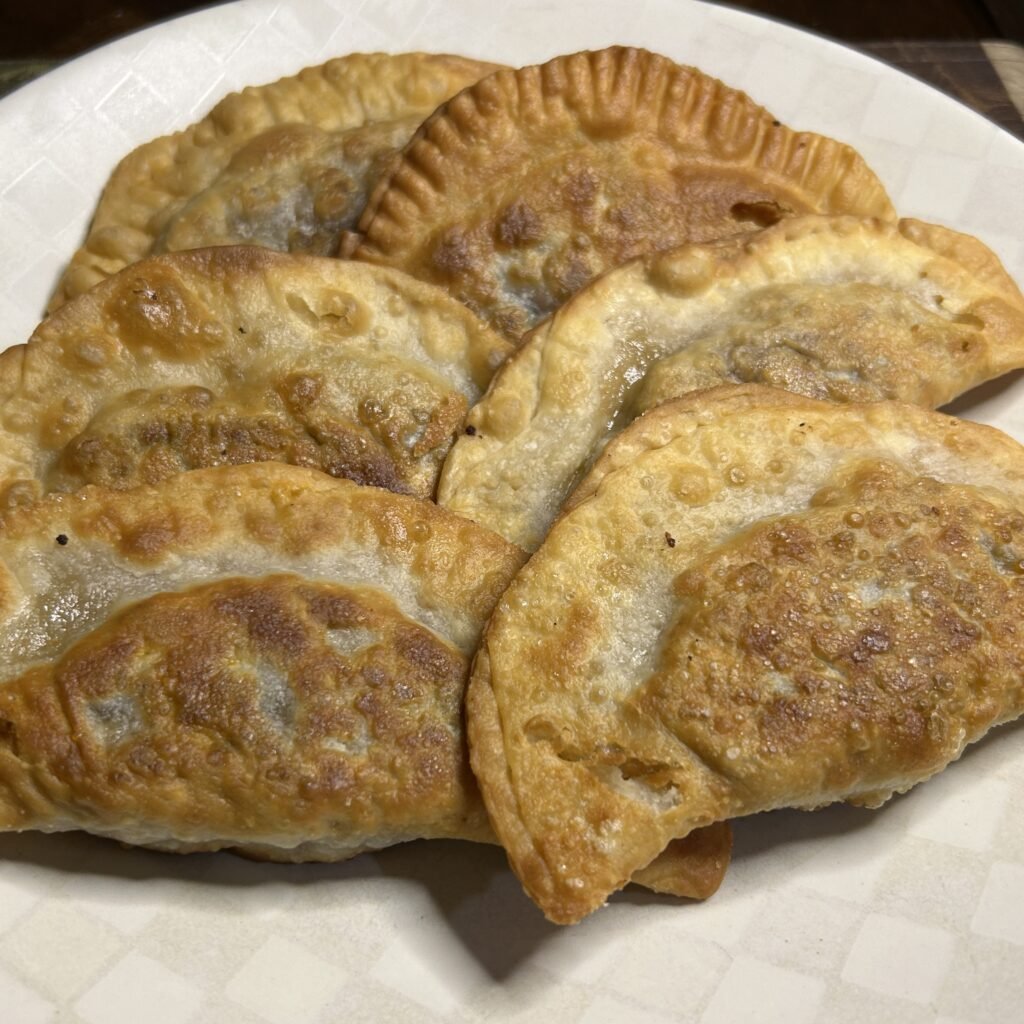
### Haitian Patties
Haitian patties stand out for their multi-layered, crispy pastry crust filled with savory meats or seafood. Luxuriating in bold seasoning blends including garlic, Scotch bonnet peppers, and herbs, these patties are beloved as breakfast items or snack-time staples. They symbolize Haiti’s vibrant multicultural culinary heritage, blending French, African, and Caribbean influences.
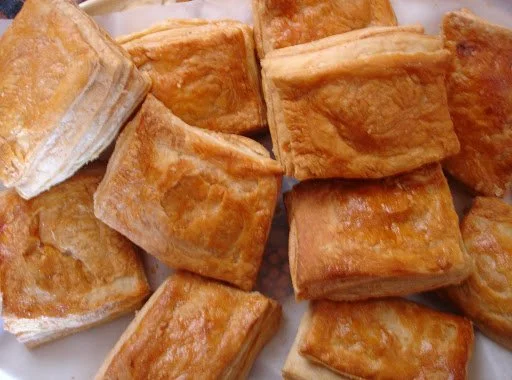
### Guyanese Patty
The Guyanese patty’s vibrant yellow, flaky crust—infused with turmeric or curry powder—visually and flavorfully differentiates it. The rich, deeply spiced ground meat filling (often beef, chicken, or vegetable) reflects Guyana’s Afro-Indian heritage, merging culinary practices from Indian indentured laborers and African-descended populations.
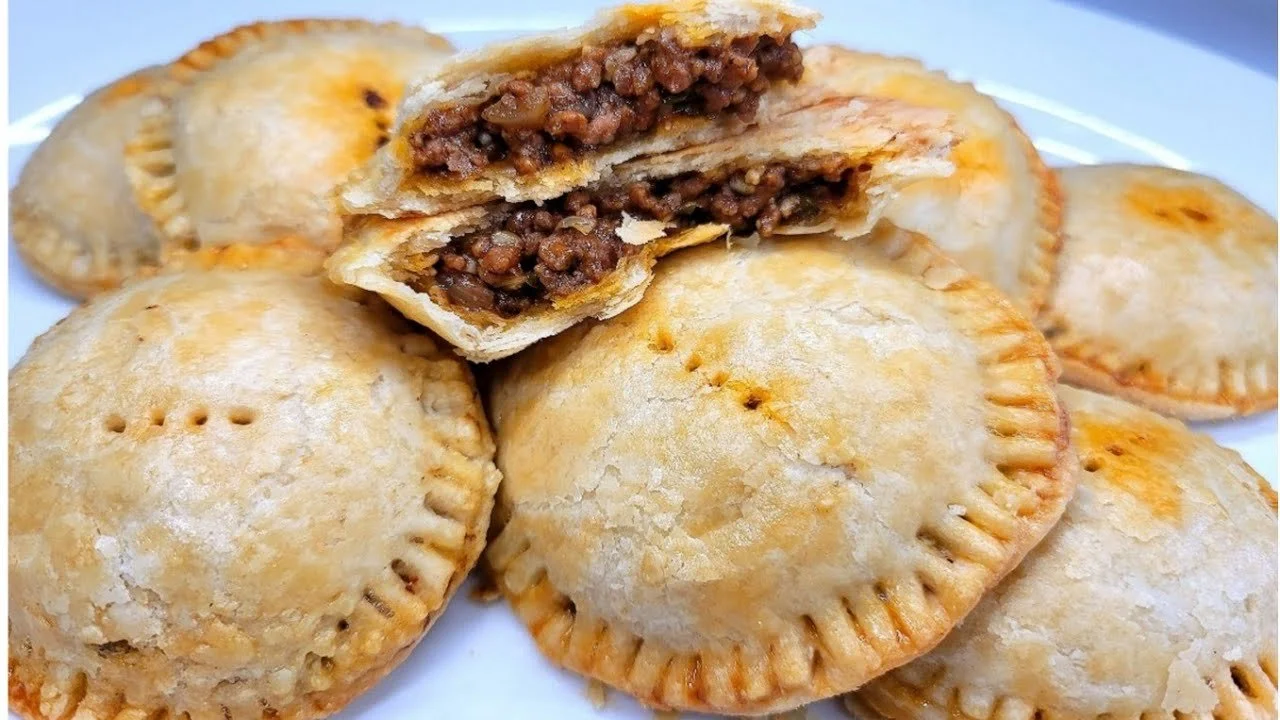
### Jamaican Patty
Jamaica’s iconic patty is a shining emblem of national cuisine and diaspora identity. The golden turmeric-hued pastry envelops spiced fillings ranging from beef and chicken to vegetables. Its slightly spicy, aromatic profile traces both colonial histories and Indigenous culinary knowledge, now embraced globally through Jamaican diaspora communities.
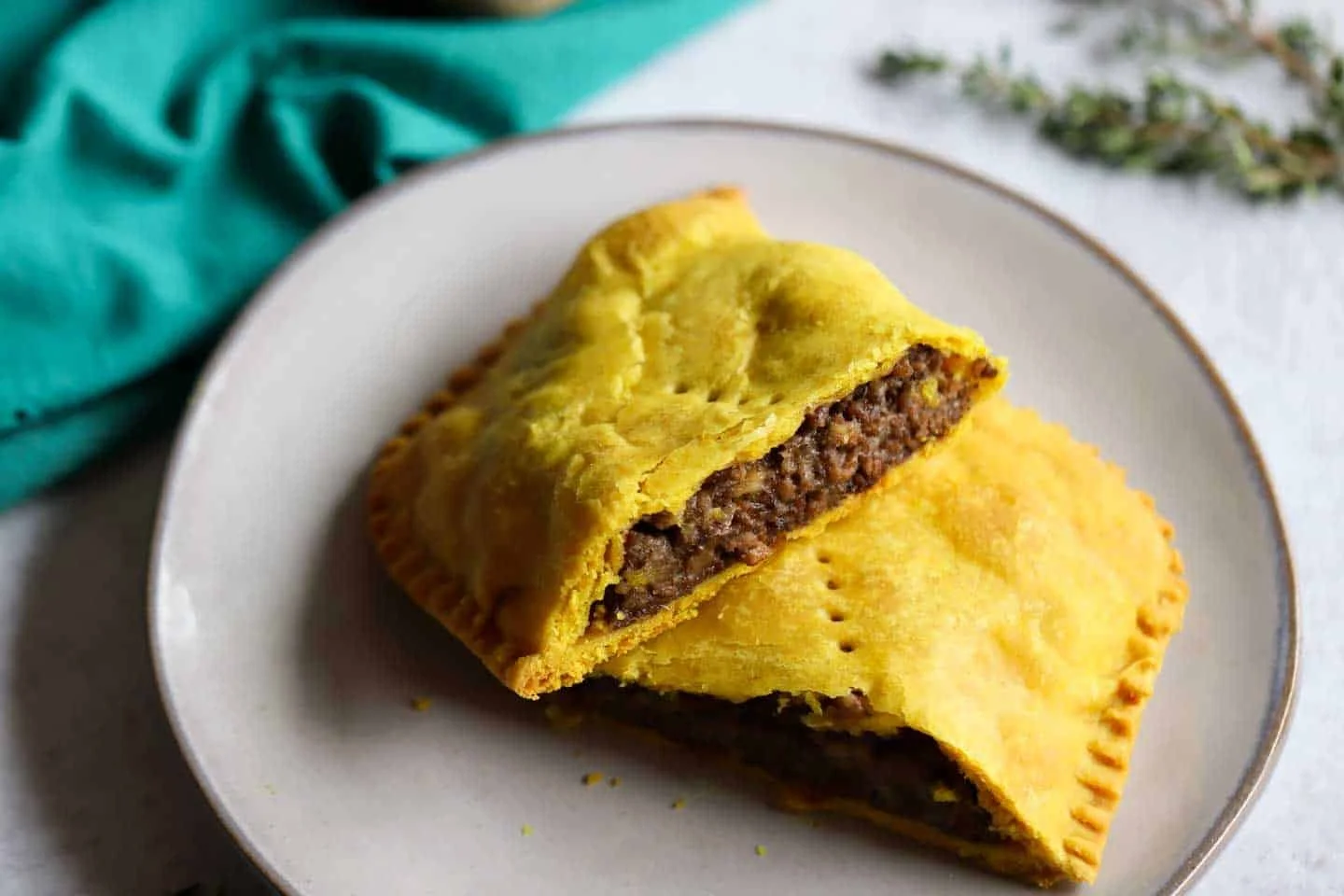
Through these pastries, diasporic people celebrate identity, history, and creative culinary adaptation—each bite a testament to cultural survival and joyous sharing.