
One World, Many Callaloos: Tracing a Leafy Green Across the Diaspora
One World, Many Callaloos: Tracing a Leafy Green Across the Diaspora
The word callaloo has followed me my whole life, but only recently did I realize how many stories are braided into those four syllables. It's a dish, a plant, a memory, and a language shared across islands and oceans—yet it never looks exactly the same twice. As I started digging into its history for my Ancestral Rootz work, I realized I wasn't just researching a recipe; I was tracing a leafy green migration route from West and Central Africa to the Caribbean and back again.
A Christmas Morning Callaloo (Trinidad, Jamaica, and Me)
My most vivid first memory of callaloo isn't Jamaican at all—it's Trinidadian by way of Venezuela, right in a New York kitchen.
It was Christmas morning, and my friend's grandmother, who had roots in Trinidad and Venezuela, brought out a pot of something dark green, glossy, and almost soup-like. It wasn't the cut-up leaf breakfast side I knew from Jamaican tables. This callaloo was silky, almost pourable, with dasheen bush (taro leaves), okra, coconut milk, and all those quiet background aromatics that Trini cooks know how to coax into harmony. It was rich, earthy, and comforting, and it wrapped the holiday in a kind of vegetal velvet I didn't have words for yet.
Later, back in my own kitchen, I tried to recreate that feeling. I bought Jamaican callaloo—the amaranth greens I was used to—and kept cooking them down, adding more liquid, trying to coax them into that Trinidadian, soup-like state. No matter what I did, it wasn't the same. The texture stubbornly refused to become that Trini-style, almost stewed purée I had tasted. I thought it was my technique. Only later did I learn: it wasn't my cooking; it was the plant.
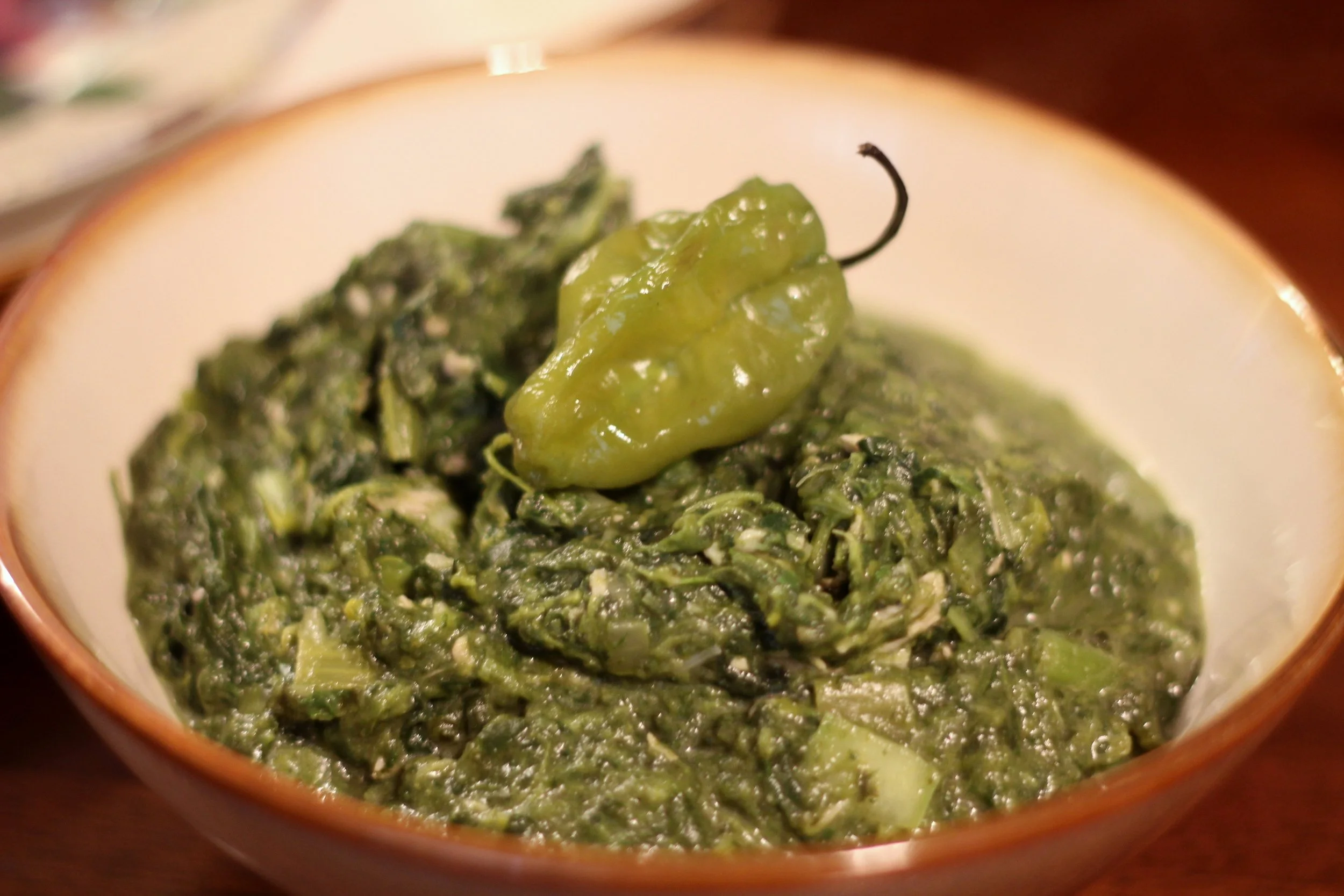
Callaloo the Trinidadian & (other Caribbean countries) soup like version made from Dasheen leaf, okras etc.
One Word, Different Plants
Here's the twist that unlocked everything for me: callaloo is a shared word, but not always a shared leaf.
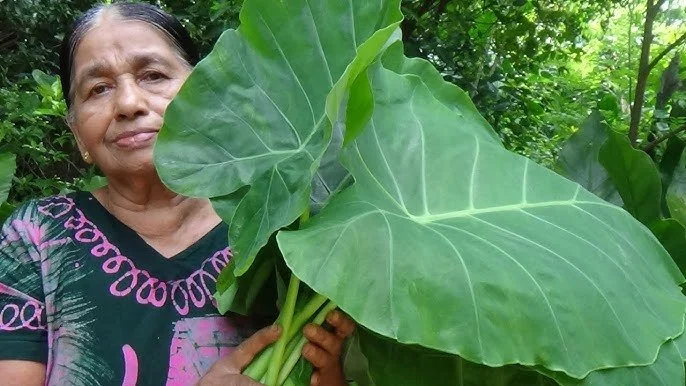
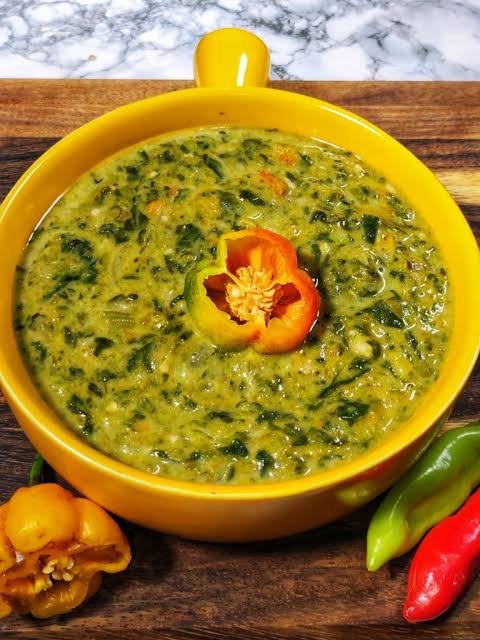
In Trinidad and Tobago, Grenada, and Dominica, callaloo is typically made from dasheen bush—the leaves of the taro or related Xanthosoma species—often simmered with okra, coconut milk, and sometimes crab, pigtails, or other meats until it becomes a thick, soup-like stew.
In Jamaica, Belize, St. Lucia, and Guyana, the word callaloo usually refers to amaranth, a totally different plant. These tender greens get steamed or sautéed, often with garlic, onions, Scotch bonnet, tomatoes, and sometimes saltfish, and are eaten as a side at breakfast or dinner—more like sautéed spinach than a blended soup.
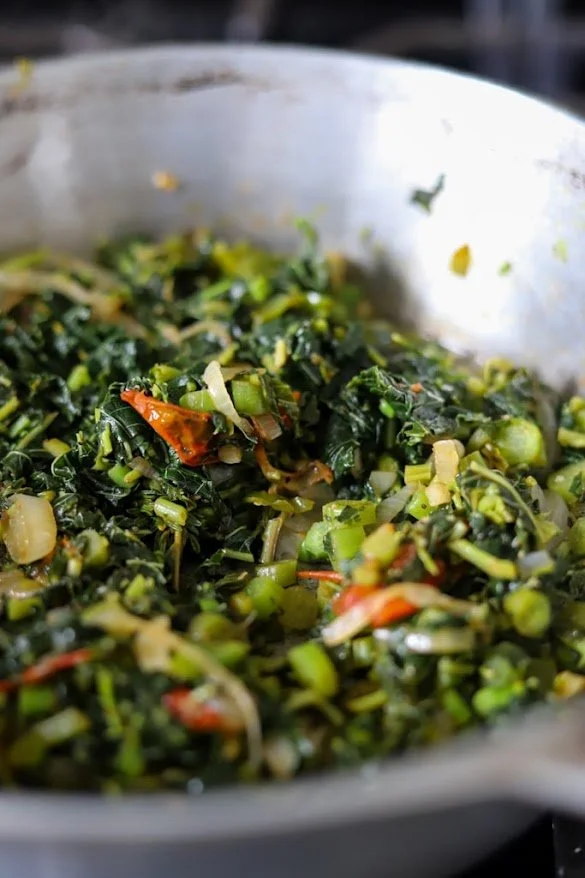
So when I stood in my kitchen trying to make Jamaican callaloo behave like Trini callaloo, I was asking amaranth to impersonate dasheen. No wonder it refused.
This is where the story gets even more layered. In some places, callaloo is the name of the leafy plant; in others, it's the name of the dish itself. In Trinidad, callaloo is the prepared stew. In Jamaica, callaloo is the plant, and the dish takes its name from the greens that go into it.
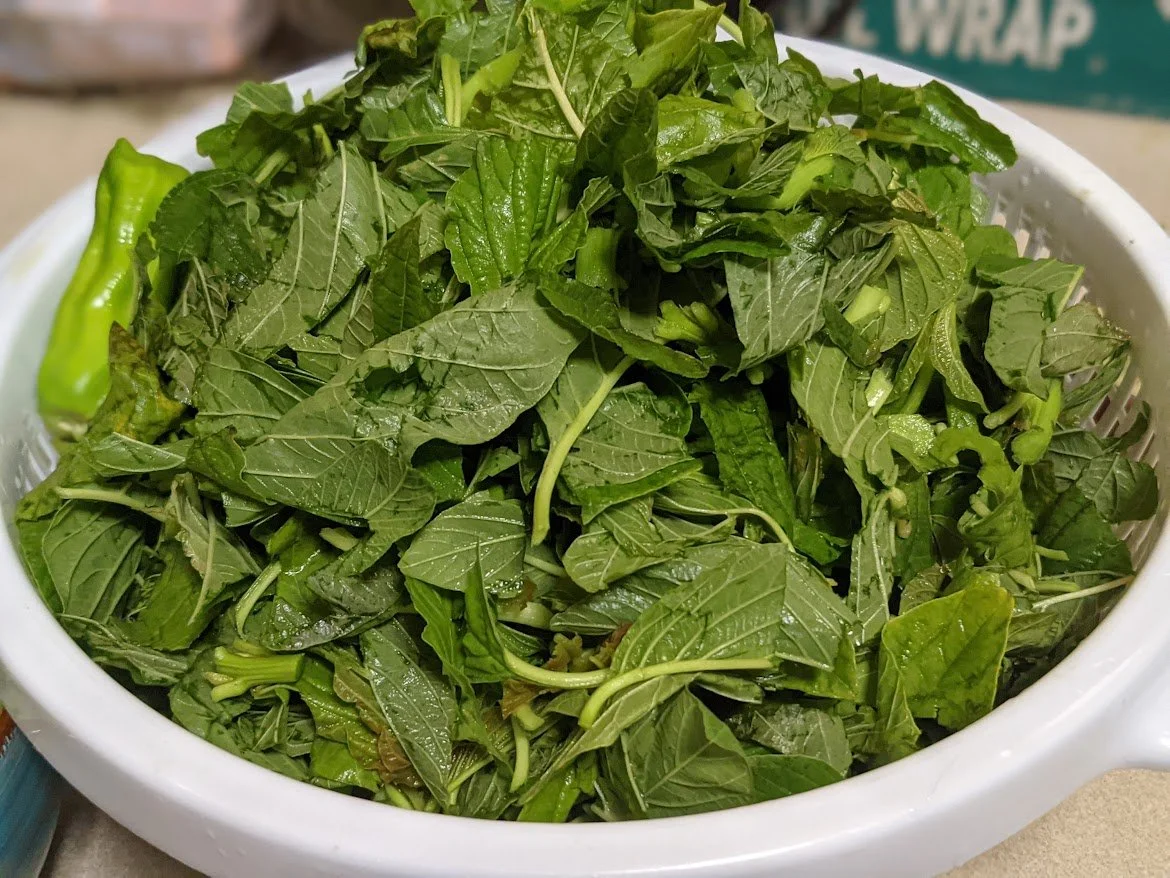
A Word With African Roots and Americas Branches
Etymologically, callaloo carries its own diaspora passport.
Many scholars trace the term to Kimbundu, a Bantu language from Angola, where words like kalulú refer to okra or a vegetable dish—very similar to the way callaloo functions as a leafy stew in parts of the Caribbean and in Haitian Creole.
Another thread points to Tupi, an Indigenous language from Brazil, where caárurú means "thick leaf." Through Portuguese colonial routes, this term likely influenced words like caruru in Brazil and may have echoed into Caribbean callaloo via Lusophone and Francophone channels.
Early written records show variant spellings—calalou, calalú, callaloo, kallaloo—in French, Spanish, and English texts from the late 1600s onward, reflecting how the word circulated through colonial reports, travelogues, and plantation accounts while enslaved cooks quietly defined what it would taste like.
At its heart, callaloo emerges from a fusion of West African culinary practice and Indigenous Caribbean plants. Enslaved Africans brought with them the habit—and the need—of cooking down leafy greens into thick, nourishing stews. In the Caribbean, they adapted to what was available: taro and tannia leaves, amaranth, local "bush" greens, and okra, folding in Indigenous knowledge about Xanthosoma and other plants. The result is a dish that is African in method, Caribbean in terroir, and diasporic in meaning.
Pondu, Palaver Sauce, and That "Wait a Minute" Moment
My curiosity really erupted when I stumbled across pondu, a Congolese dish made from cassava leaves stewed down with palm oil, sometimes peanut or other fats, and seasonings. The first time I saw a photograph of pondu, my reaction was instinctive: That looks like callaloo. Not Jamaican sautéed callaloo, but that deeply cooked-down, almost spoonable Trini style. I had to pause and ask myself—am I just projecting? Or is there a real connection here?
Then I started to notice a pattern: across West and Central Africa, dishes like palaver sauce, kontomire stew, and various leafy sauces share a key technique—greens cooked until they surrender, thickened and enriched with okra, palm oil, and local aromatics. In Haiti, the word kalalou is used for okra-based stews and sauces like sos béf ak kalalou or tomtom ak kalalou (breadfruit with okra sauce), echoing those same African preparations. In the Caribbean, callaloo takes many forms, but that core idea—greens cooked low and slow into something dense, glossy, and nutrient-dense—is the throughline.
Seeing pondu for the first time felt like staring through a mirror into another part of the diaspora. It was a reminder that so many of the dishes we call "Caribbean" are less about isolated invention and more about continuation and adaptation of African foodways under new skies. Sometimes the leaves change—cassava leaves in Congo, dasheen in Trinidad, amaranth in Jamaica—but the technique, the intent, and the body memory are familiar.
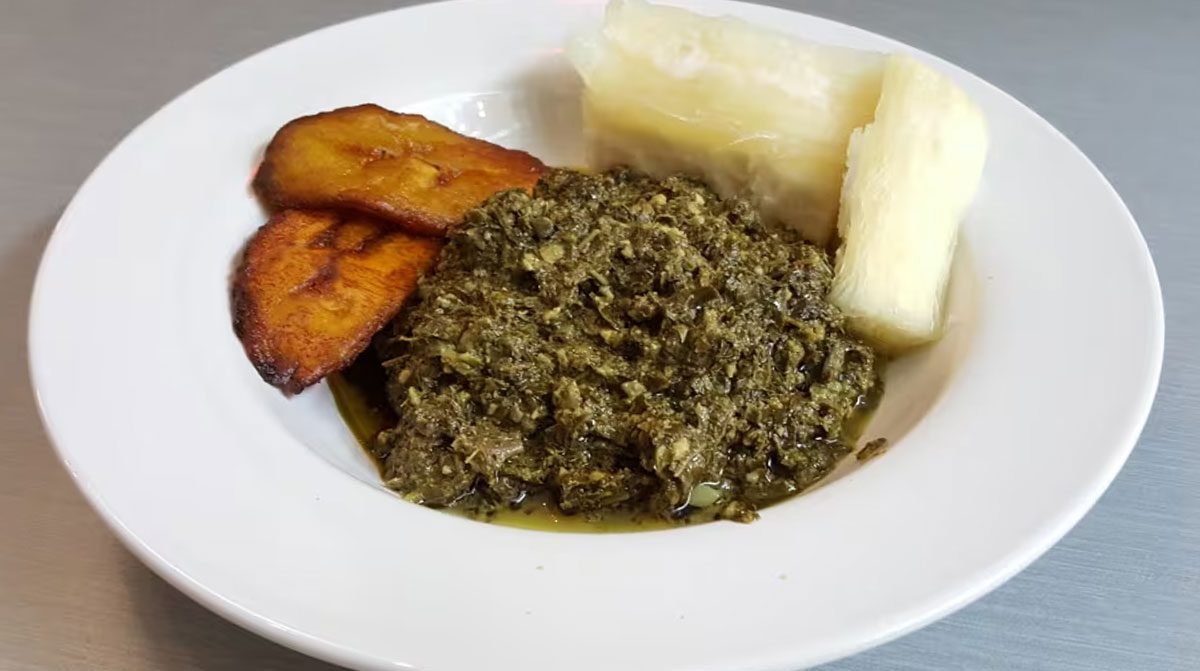
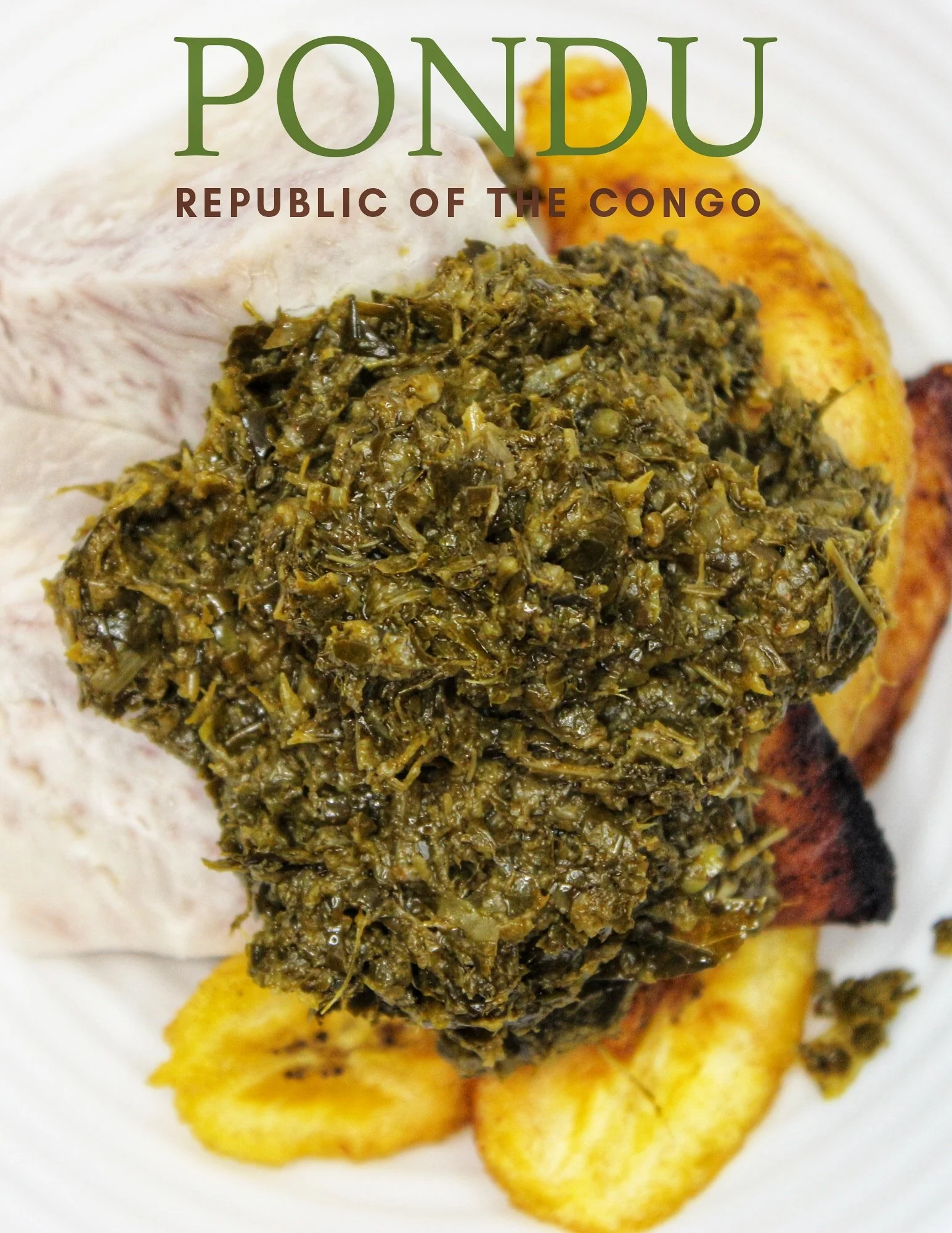
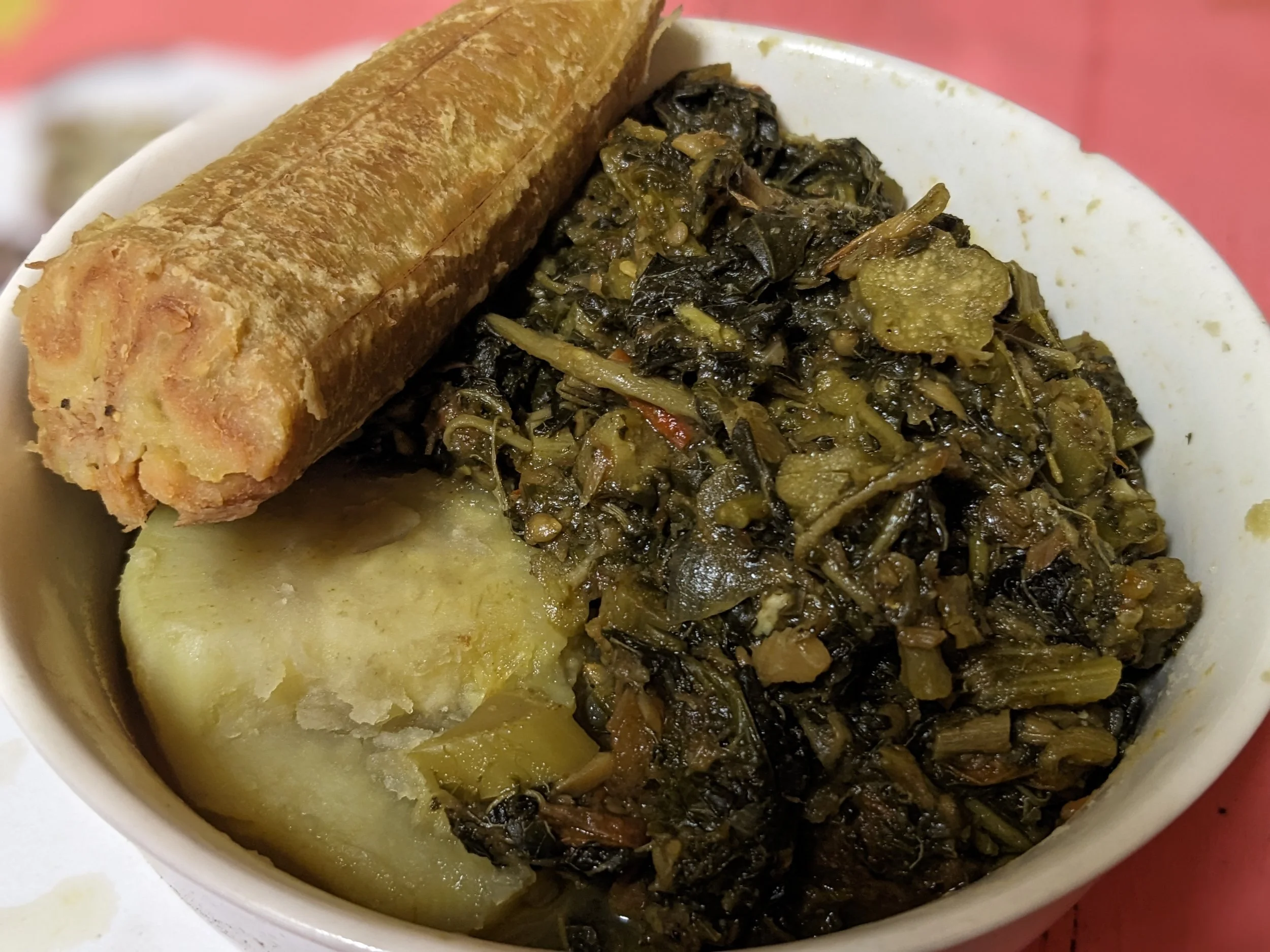
Some greens Chef Ayana cooked up near provision
Sukuma Wiki: Kenyan Greens That Felt Like Home
Then came the moment that stopped me cold: sukuma wiki, the Kenyan staple of collard greens sautéed with onions, tomatoes, and oil. The first time I saw it, something deep inside me said, This is Jamaican callaloo.
The visual was unmistakable—the greens cooked down but still with texture, the tomato brightness cutting through the oil, the onions providing that sweet backbone. It was my Saturday morning Jamaican callaloo with saltfish, just speaking Swahili instead of patois. In that moment, the interconnectedness of Caribbean culture and our original African ancestors became so evident it felt like a physical pull.
Sukuma wiki literally means "to push the week" in Swahili—a dish born from making humble greens stretch across days, just like callaloo stretches nutrition and memory across generations. Seeing it was like looking at my grandmother's kitchen through a time portal, proof that the method of cooking greens—sautéed, seasoned, substantial—traveled with our ancestors and took root wherever they landed.
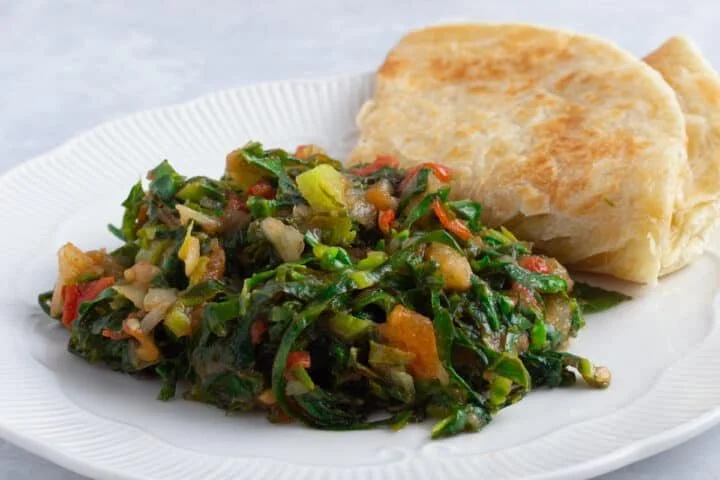
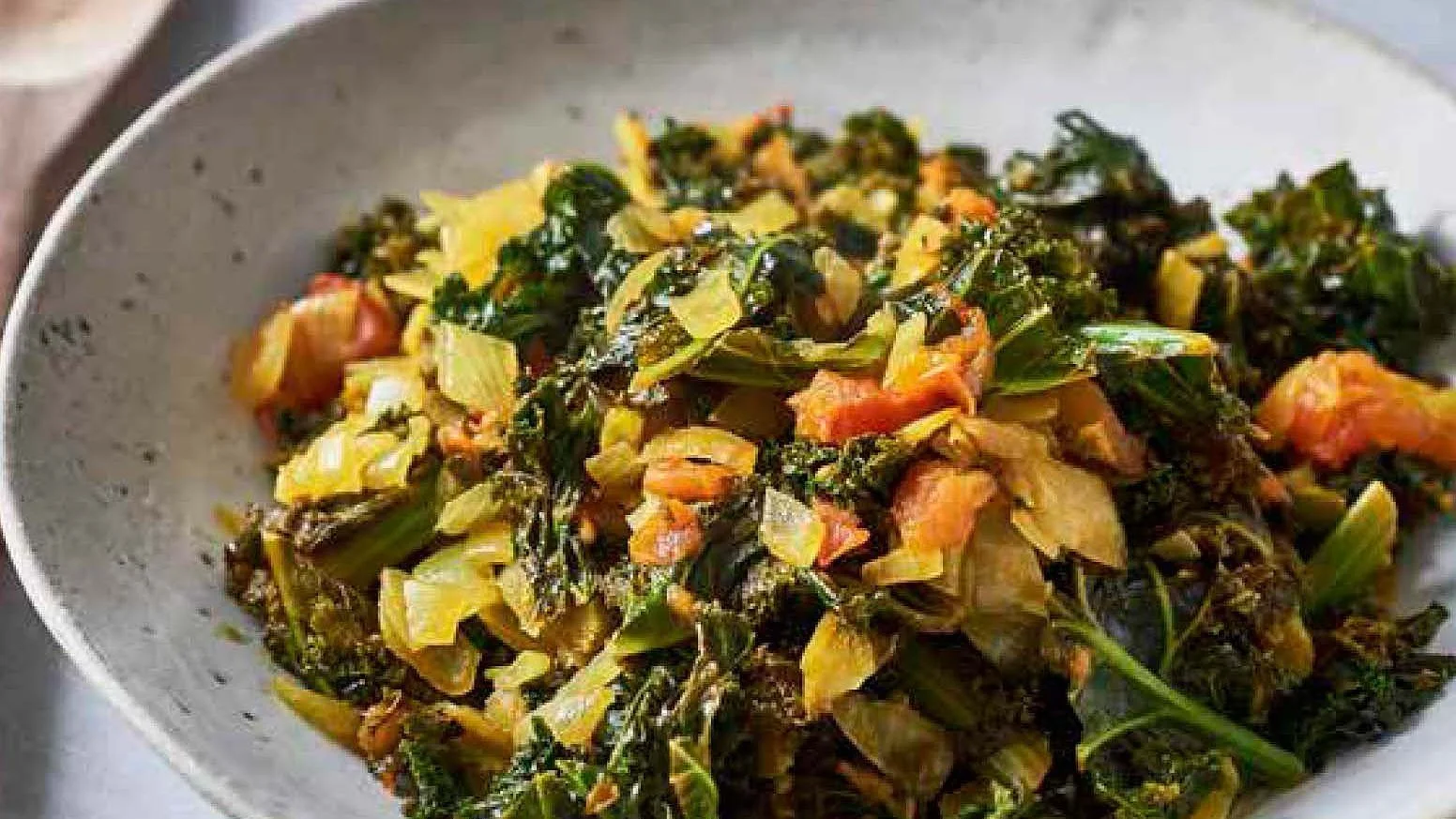
Sukuma Wiki

This Jamaican Callalloo (Amaranth) & Fried Bake resemblance is uncanny to the Kenyan Sukuma Wiki WOW!!!
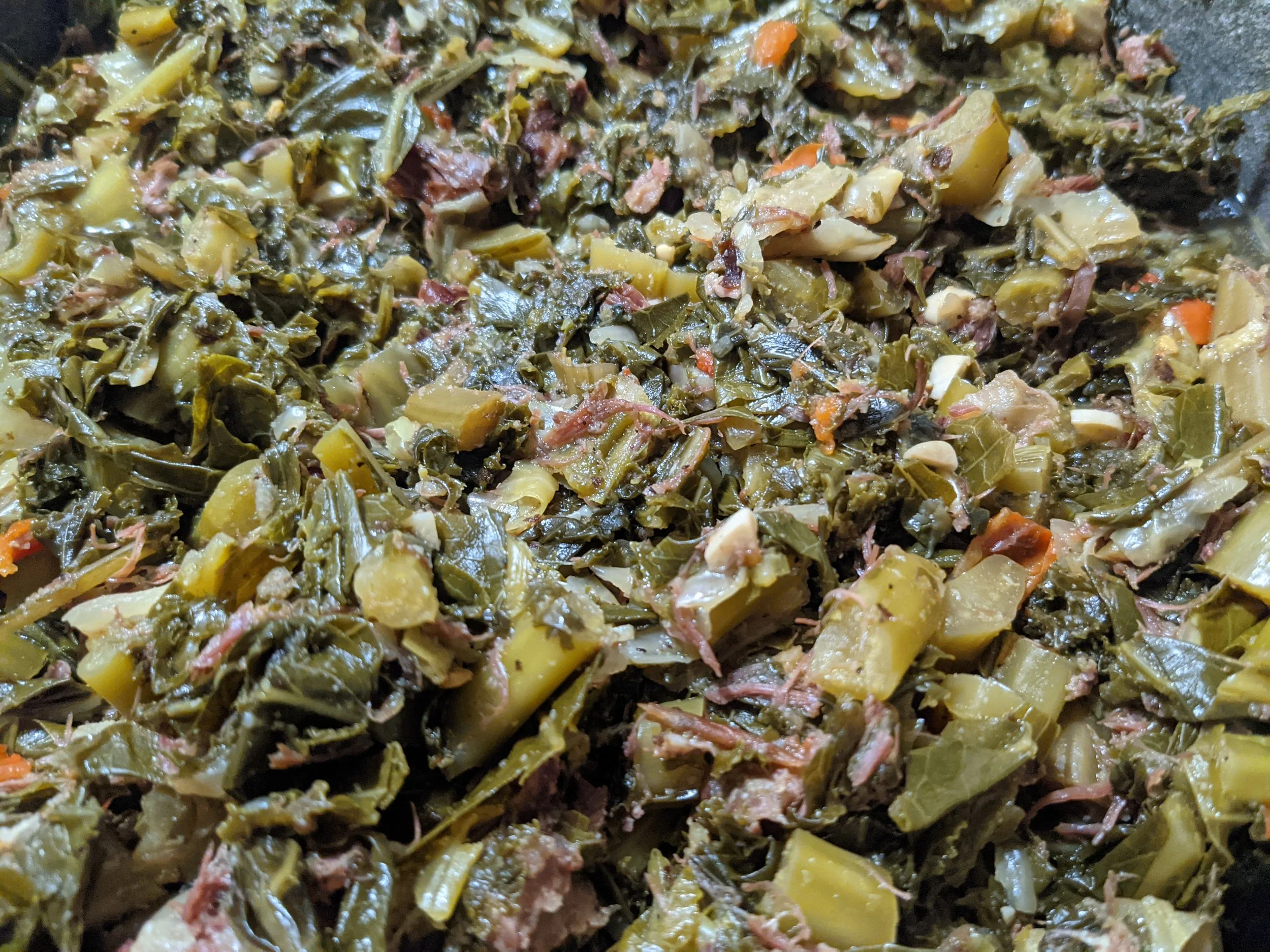
Chef Ayana’s mixed Collard Greens & Cabbage with Smoked Turkey
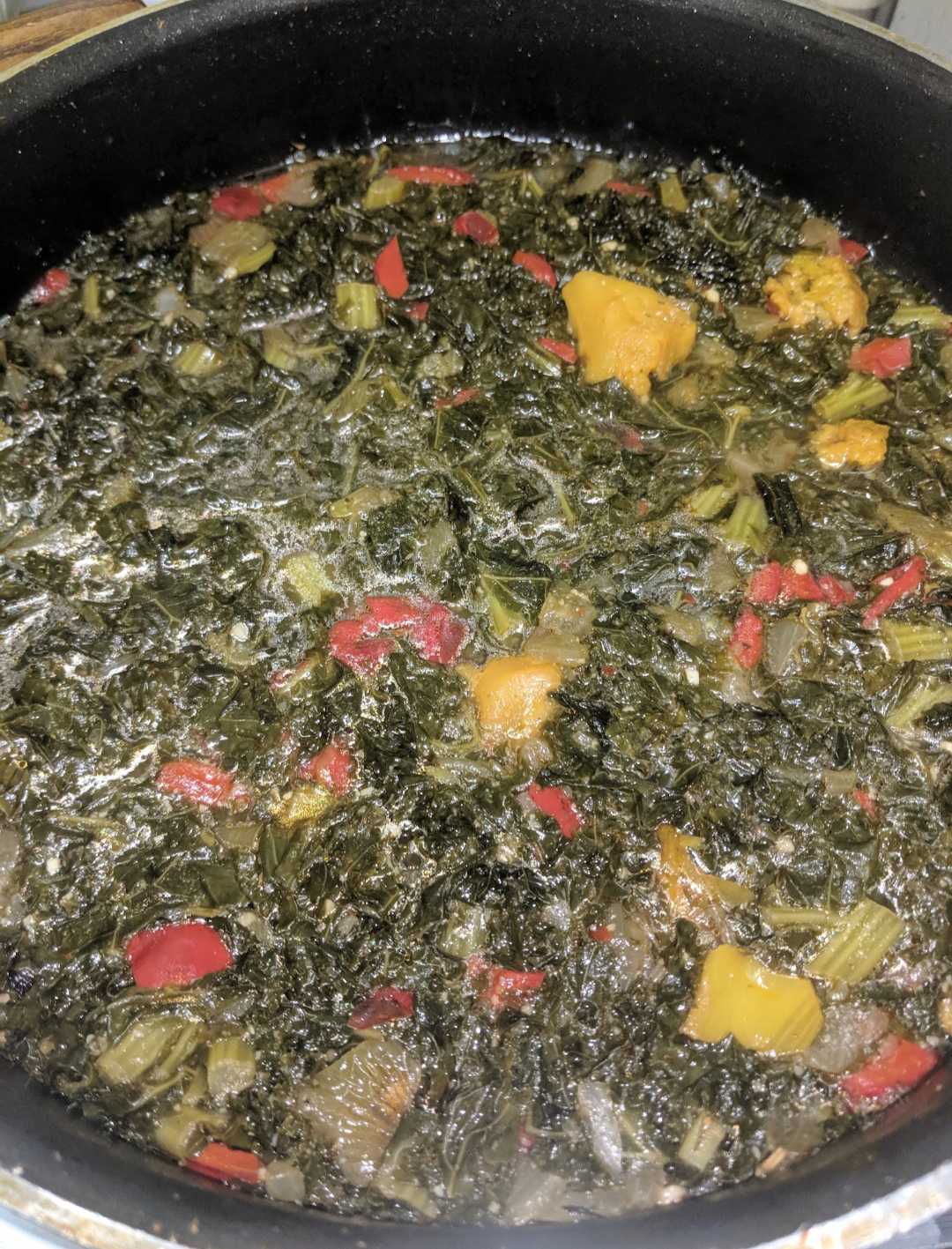
Kale cooking in the Dutch Pot
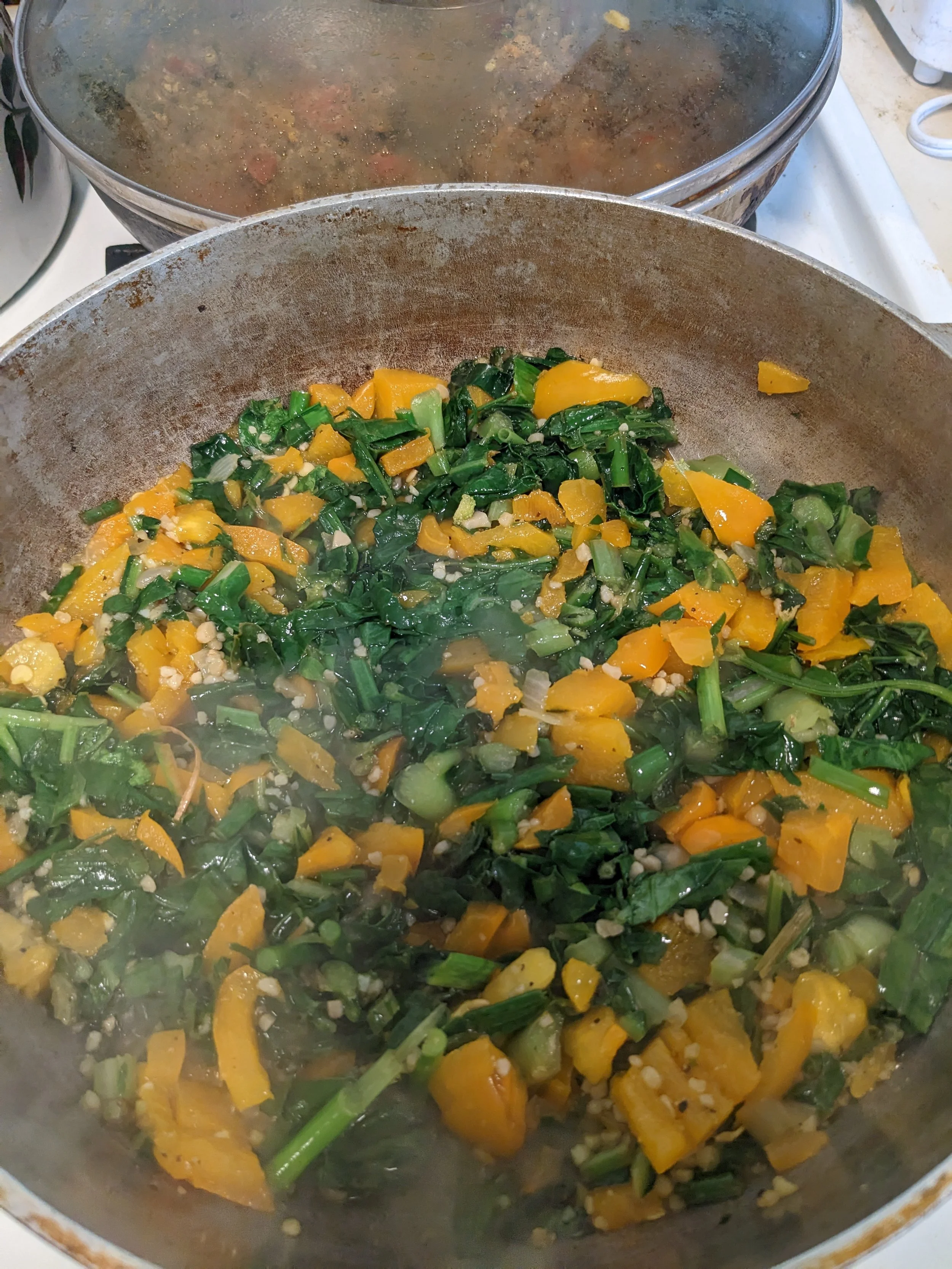
Sea Kale picked from community garden @ Socrates Sculpture Park sauteed with garlic, onions, & orange bell peppers.
Callaloo as Method, Not Just Ingredient
What I've come to realize is that callaloo is as much a method as it is a plant or a dish. It's a way of treating greens:
Selecting sturdy, locally available leaves (taro, tannia, amaranth, water spinach, cassava, even okra leaves).
Pairing them with okra or other natural thickeners to give that characteristic viscosity.
Layering in fat—palm oil, coconut milk, animal fats—to turn hardship ingredients into sustenance with body and depth.
Cooking them down until they shift from "salad" to "sauce," from side to center of the plate.
In that sense, callaloo sits in the same family as pondu and other African leafy stews. It's a technology of survival and nourishment, refined over centuries and carried across the Atlantic in bodies, in language, and in the hands of cooks who refused to forget how to feed their people.
A Diasporic Green: Trinidad, Jamaica, Haiti, and Beyond
Looking across the region, you can see callaloo's multiple personalities:
Trinidad & Tobago / Grenada / Dominica:
Callaloo is a national dish—taro/dasheen leaves cooked with okra, coconut milk, peppers, onions, and often crab or salted meat, simmered into a thick, dark green soup served alongside rice, macaroni pie, and meats.
Jamaica, Guyana, Belize, St. Lucia:
Callaloo (amaranth) is steamed or sautéed with aromatics and sometimes saltfish, eaten at breakfast with breadfruit, boiled bananas, dumplings, or tucked into patties and seasoned rice. It can even show up as "callaloo juice," a drink made from the leaves.
Haiti:
Kalalou refers to okra-based stews and sauces like sos béf ak kalalou or tomtom ak kalalou (breadfruit with okra sauce), connecting callaloo back to its Kimbundu and Angolan roots where kalulú denotes okra and leafy stews.
French and Spanish Caribbean:
You'll see cognates like calalou in Guadeloupe and Martinique, sometimes featuring crab and served with Creole rice and salt cod salad; calalu in Puerto Rico linked to tannia or yautía leaves. The word flexes across colonial languages but keeps circling the same idea: cooked greens as comfort and identity.
From Confusion to Connection
So when I think back now to my own confusion—Jamaican amaranth refusing to become Trinidadian dasheen—I see it differently. It wasn't a failure; it was a clue. The plants were different, the histories were overlapping, and my kitchen experiments were my body's way of reaching for a memory it recognized but couldn't yet name.
That Christmas morning callaloo from my friend's Trinidadian/Venezuelan grandmother, my Jamaican callaloo breakfasts with saltfish, the Congolese pondu that looked so familiar, and the Kenyan sukuma wiki that felt like home—they're all part of the same story. A story where West African language and technique cross the Atlantic, meet Indigenous Caribbean plants, pick up European and Asian influences, and echo back to East Africa in forms like sukuma wiki.
Callaloo, in all its spellings and leaf forms, is a reminder that our cuisines are not isolated islands; they are archipelagos of memory. When I sauté greens until they are "highly cooked down," when I taste that deep, vegetal, slightly viscous comfort, I'm tasting a method that has traveled from Kimbundu-speakers in Angola to Haitian kalalou, from Trinidadian dasheen to Jamaican amaranth, from Congolese pondu to Kenyan sukuma wiki to my own Brooklyn kitchen.
For me, that realization is the heart of Ancestral Rootz: the moment when you look at a pot of greens and suddenly see a map.
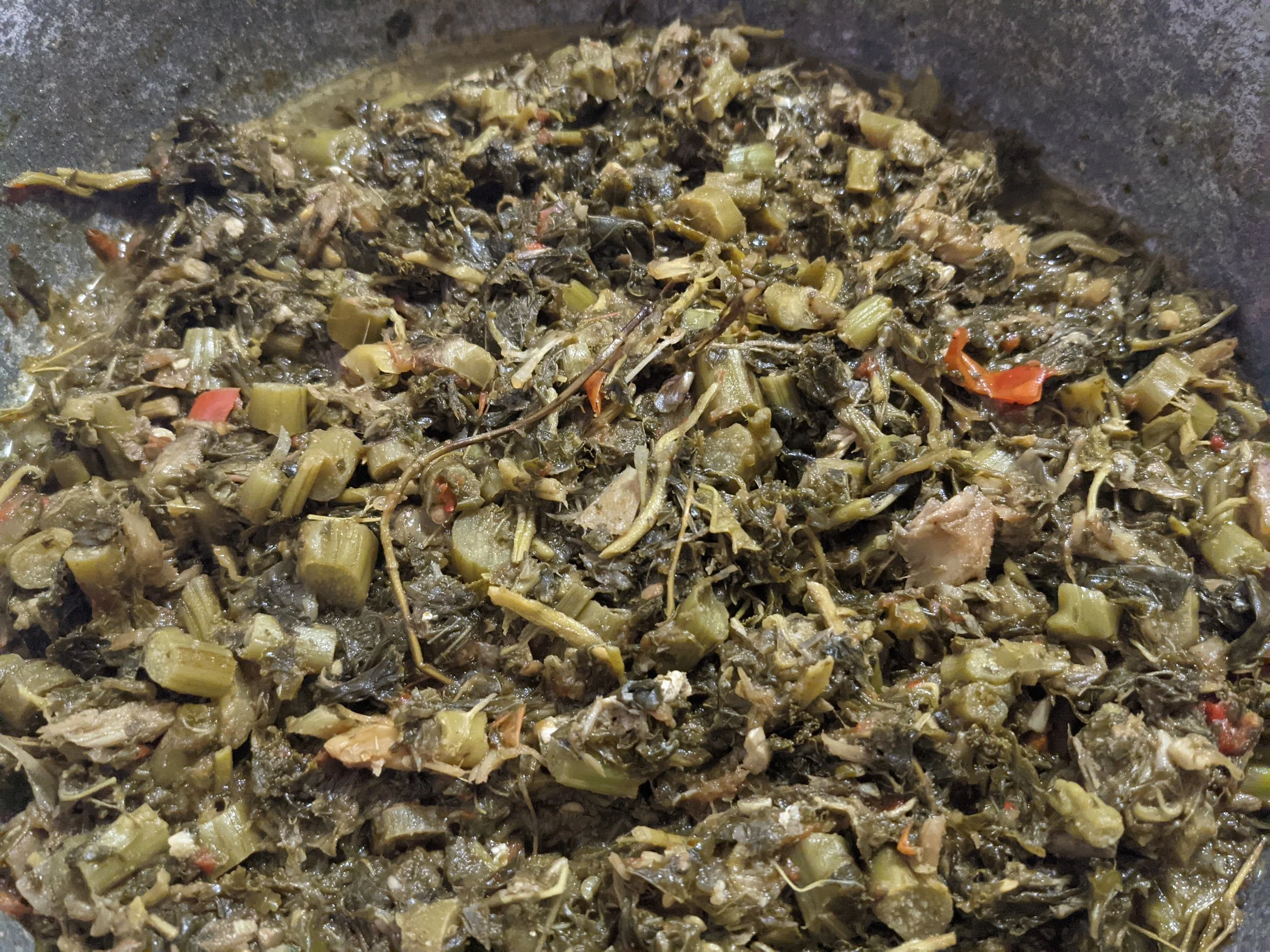
Amaranth Leaves cooked in Salted Fish by Chef Ayana
