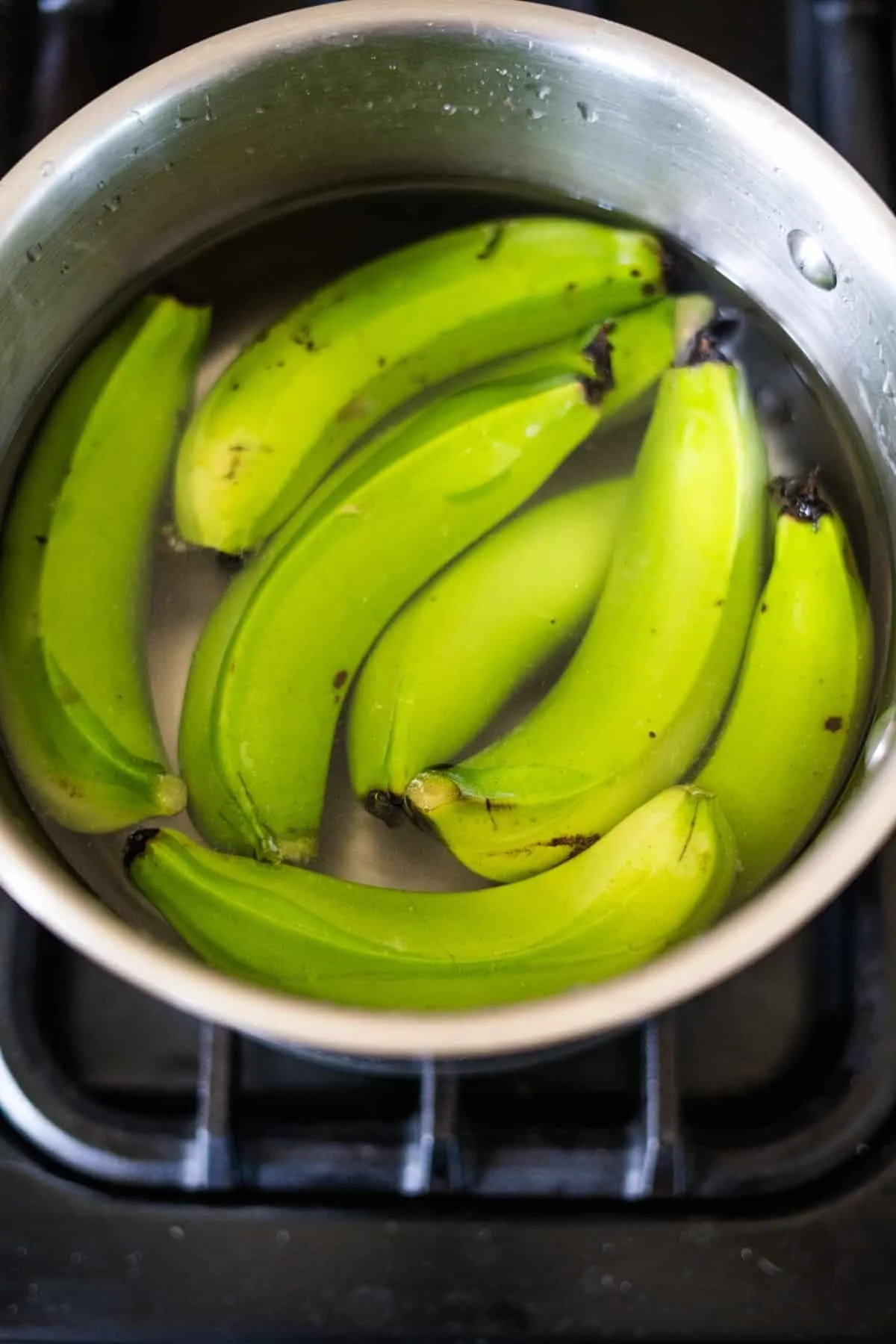
Exploring the Versatility of Plantains/Bananas Across the African Diaspora
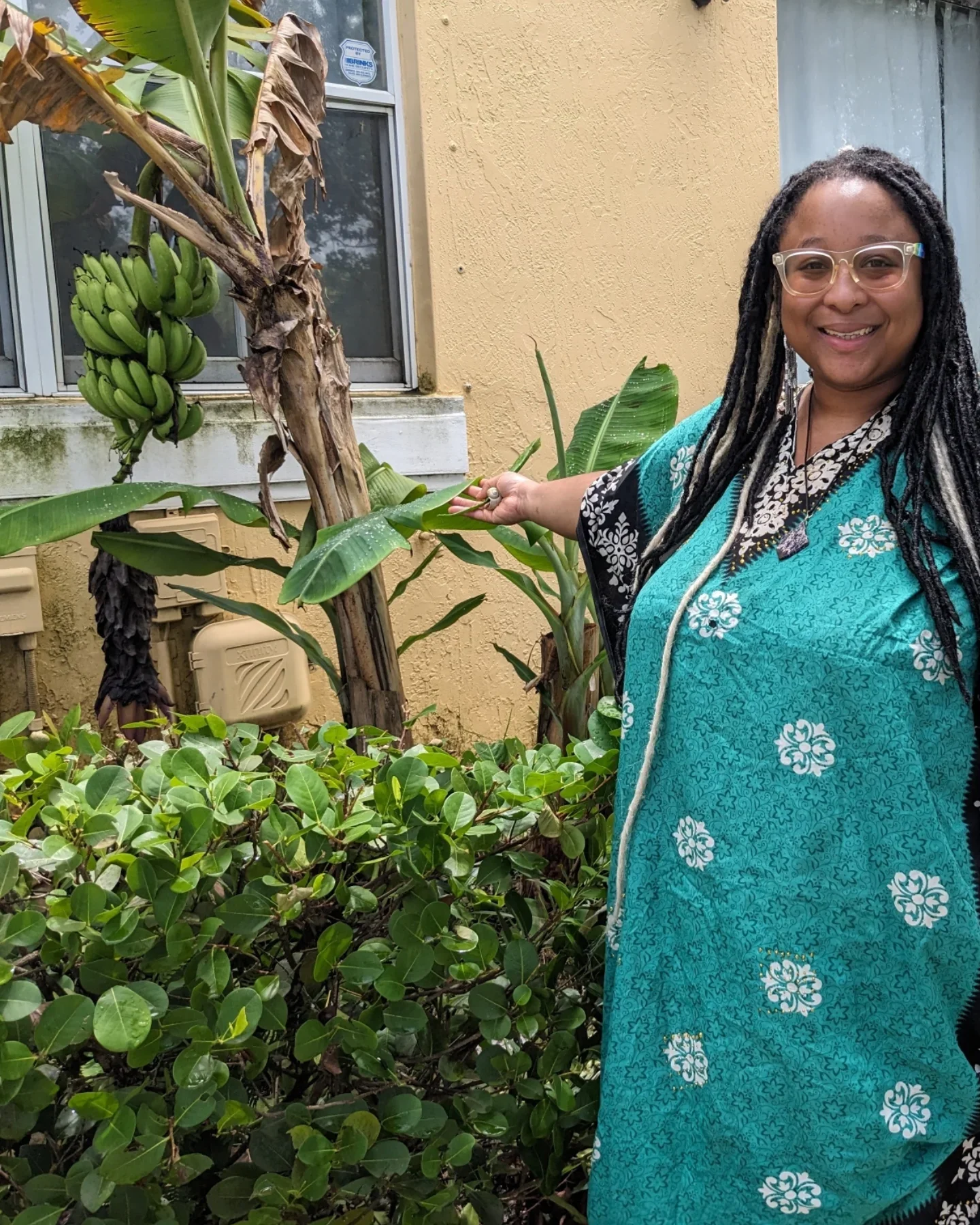
Me with the Banana Tree
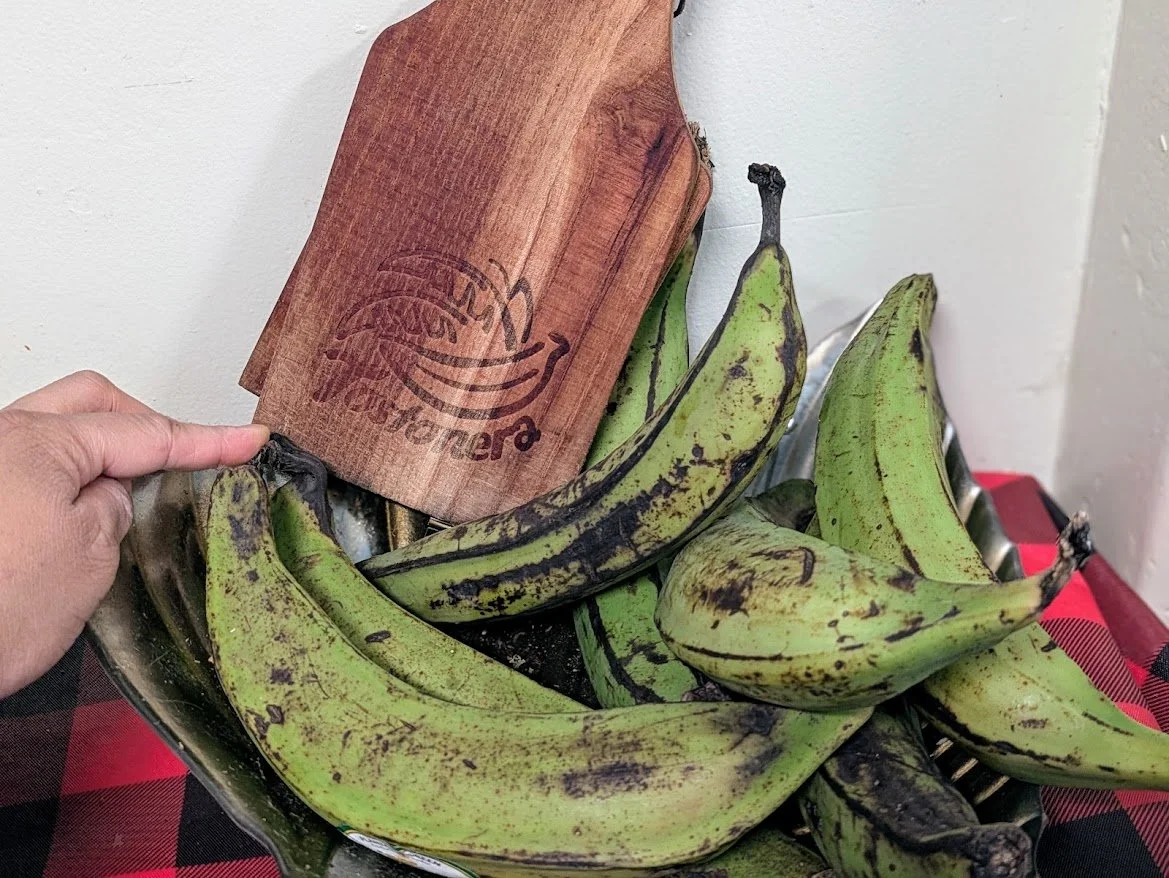
Tostonera: Plantain Press and Green Plantains
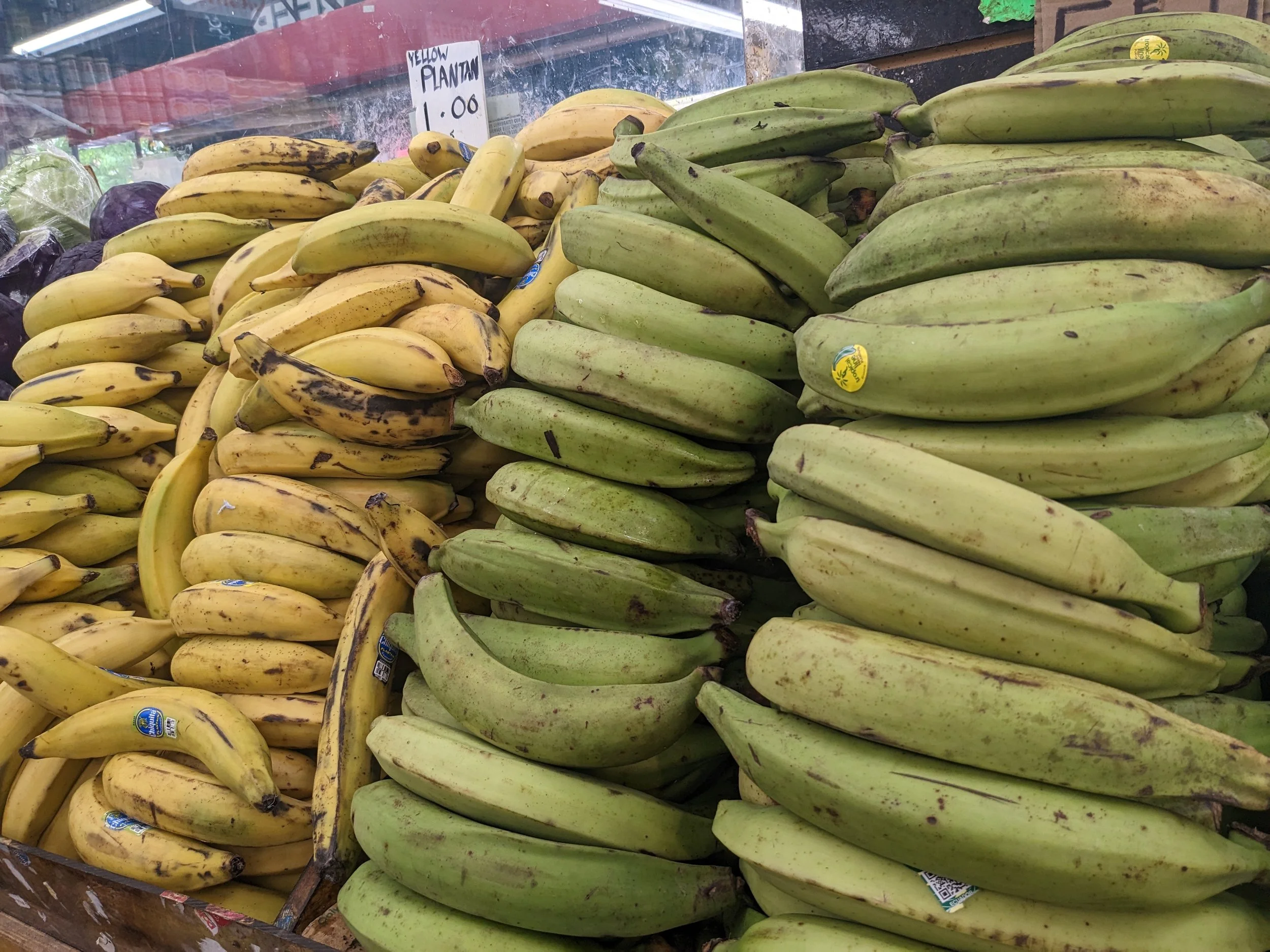
Ripe (Yellow) Plantain & Green Plantains
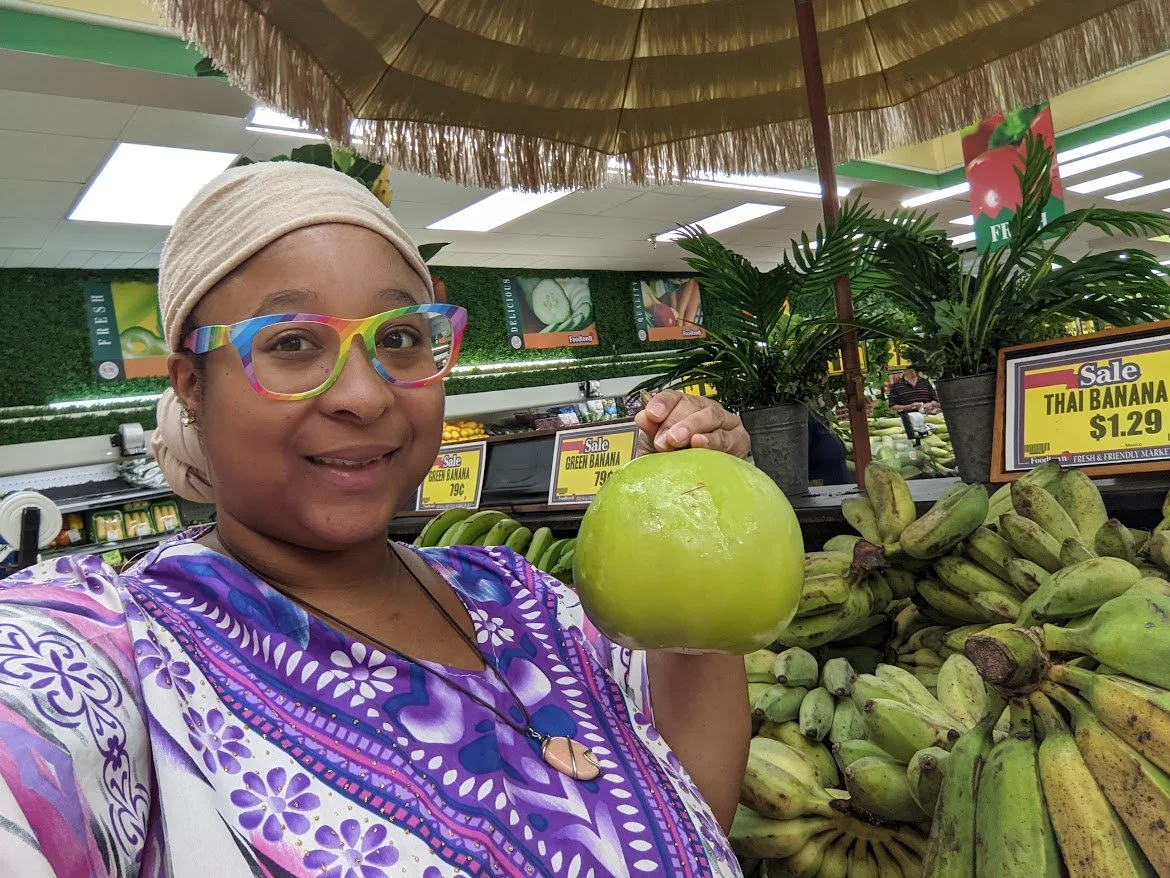
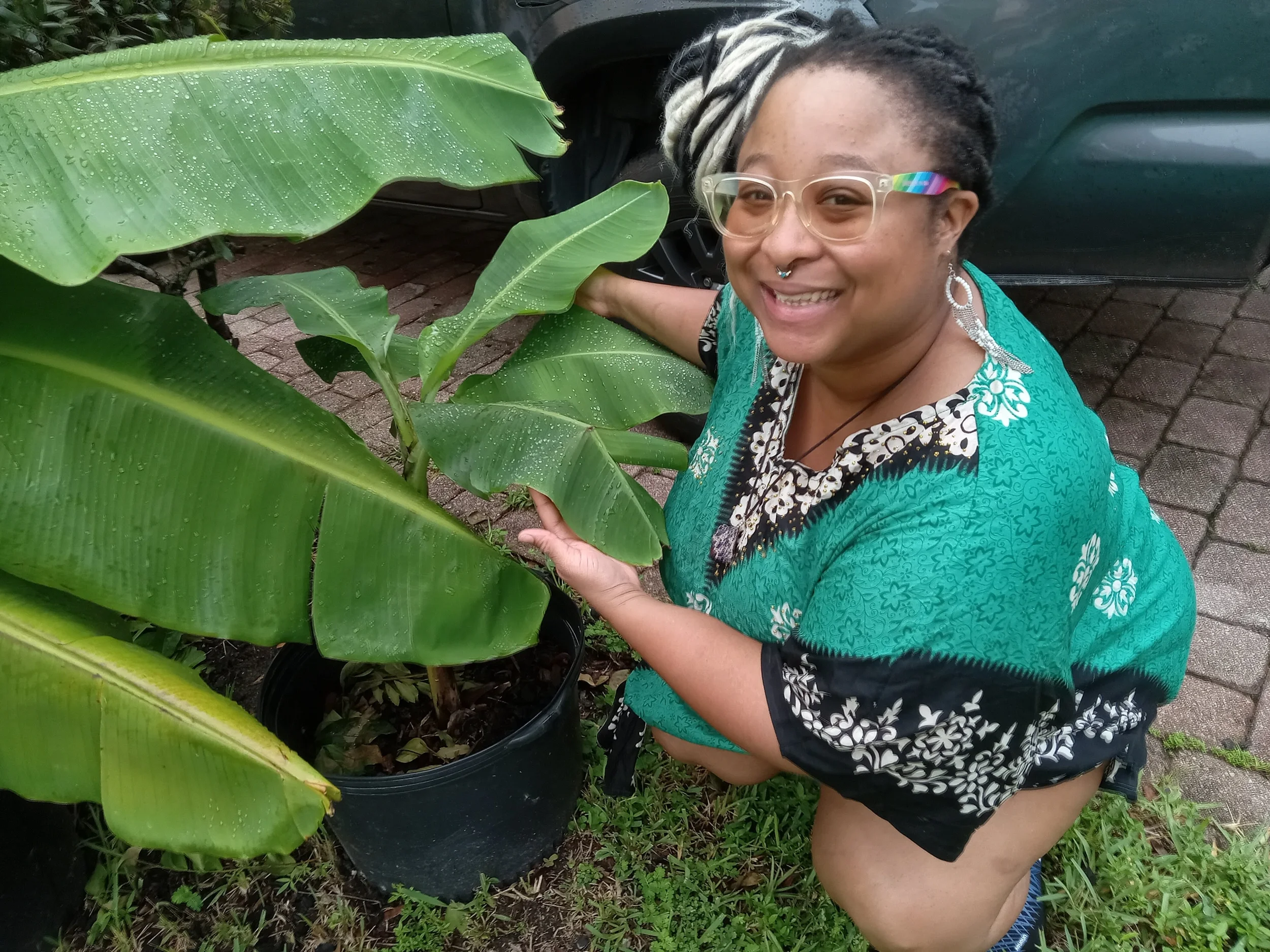
Banana vs. Plantain: Same Family, Different Personalities
Before we dive deeper, it’s important to clarify something I find myself explaining often: bananas and plantains are related, but they are not the same thing.
Bananas are usually eaten raw when ripe; they’re sweeter, softer, and commonly used as a snack or in desserts. Plantains, on the other hand, are starchier and denser, especially when green. They’re meant to be cooked—boiled, fried, baked, or grilled—and behave more like a root vegetable than a fruit in most dishes.
A few quick ways to tell them apart:
Green plantains are firmer to the touch and much more starchy than green bananas.
Green plantains often have distinct black lines or ridges running lengthwise along the peel as they mature.
Even when they start to turn yellow or black, plantains are still typically cooked, not eaten raw.
Green bananas can be used in savory ways (as in Jamaican or St. Lucian cuisine), but they soften differently and have a more delicate, less starchy texture than plantains. Understanding this difference helps explain why certain dishes work the way they do—and why you can’t always substitute one for the other and get the same result.
Plantains, a staple ingredient across the African diaspora, have a rich history and diverse culinary applications. From savory to sweet, plantains are celebrated in various forms throughout Latin America, the Caribbean, and Africa. This article explores the different ways plantains are used in these regions, highlighting their cultural significance and providing recipes to try at home.
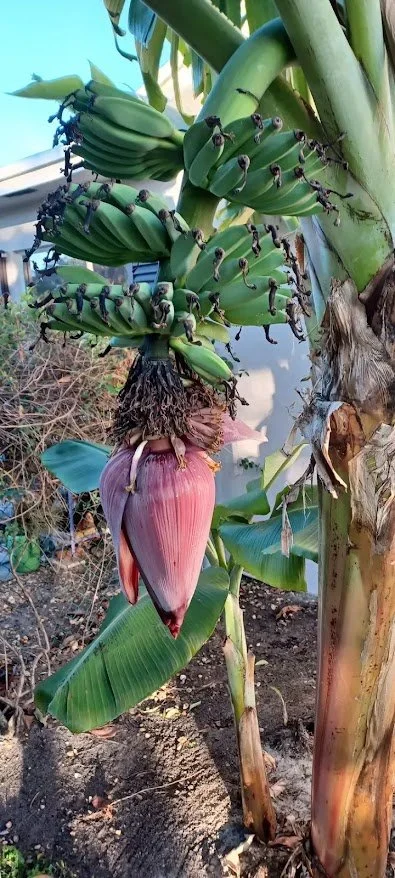
Banana Flower on tree
The Cultural Significance of Plantains**
Plantains are more than just a food item; they are a symbol of cultural heritage and resilience. Originating in Southeast Asia, plantains were brought to Africa and later to the Americas during the transatlantic slave trade. They became an integral part of the diet in many regions due to their nutritional value and versatility.
**Diverse Culinary Uses**
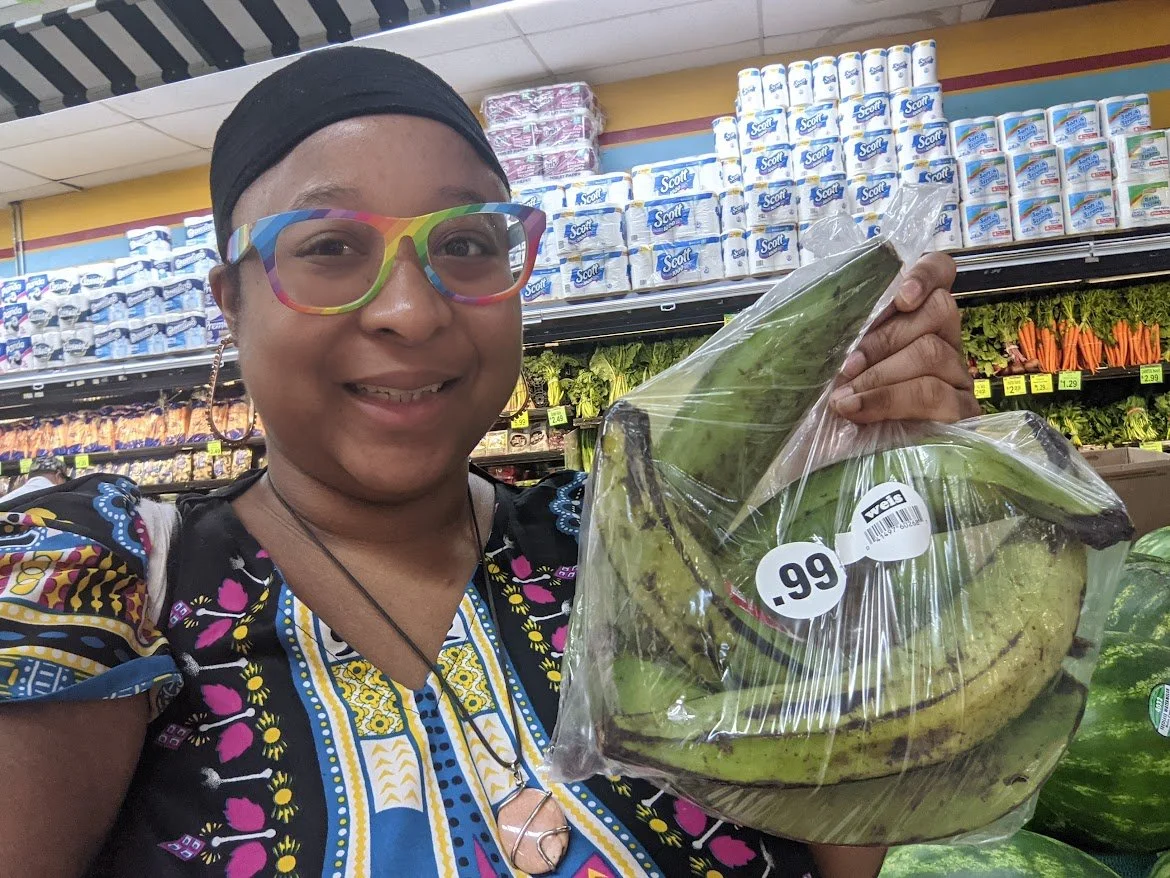
At Trade Fair with my favorite 99 cent bargain bags!
1. **Mangu (Dominican Republic)**
- **Description**: Mangu is a traditional Dominican breakfast dish made from boiled green plantains that are mashed with butter and served with sautéed onions.
- **Recipe**: Peel and boil green plantains until soft. Mash with butter, salt, and a splash of water or milk until smooth. Top with sautéed onions.
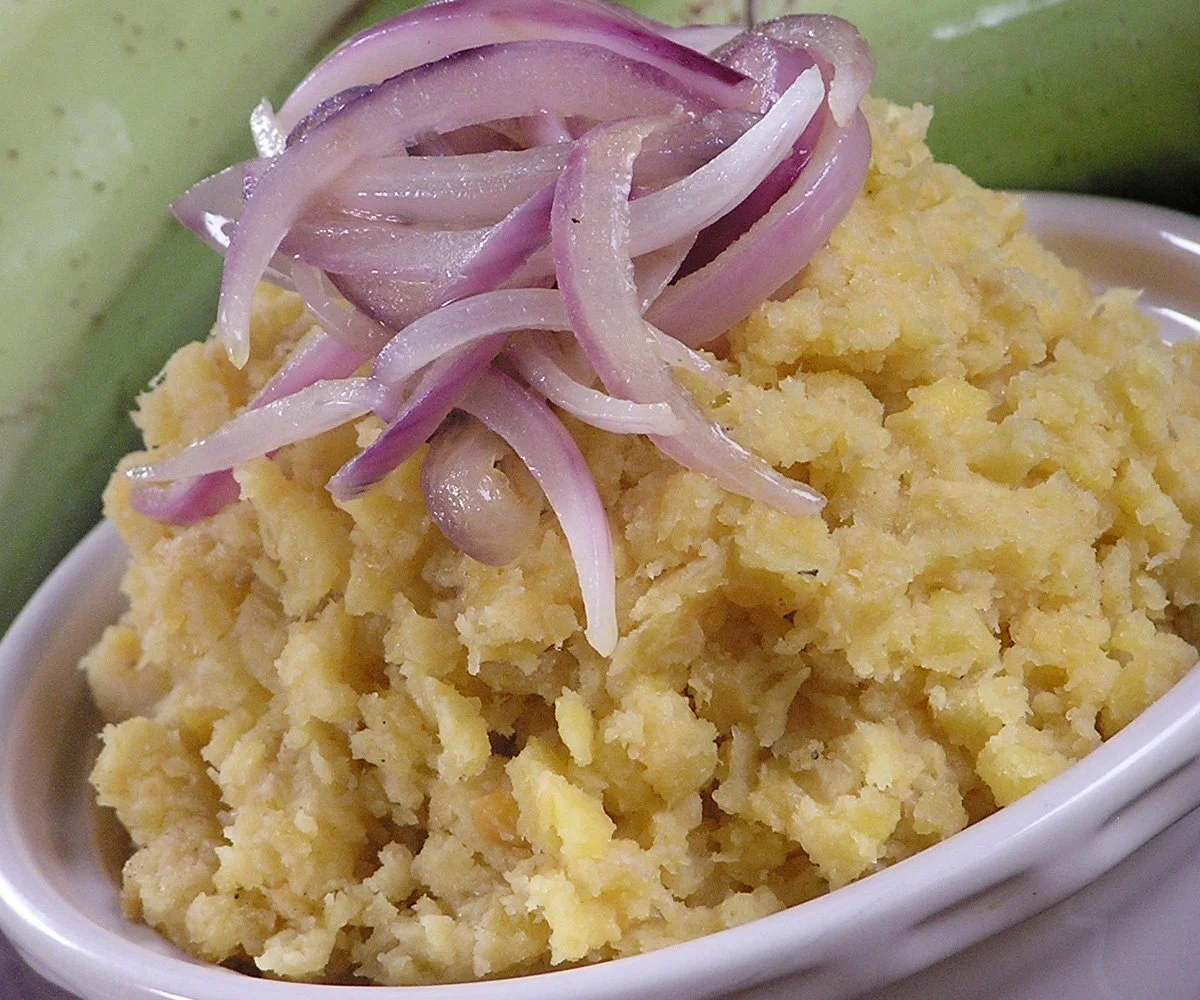
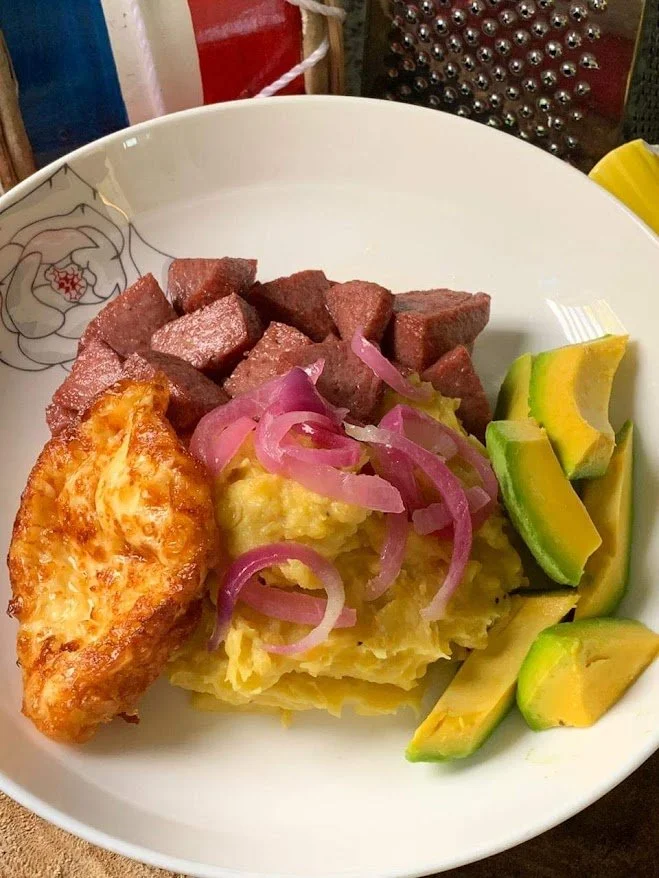
Dominican Tres Golpes Traditional Breakfast: Mangu, Fried Cheese, Salami with a side of avocado
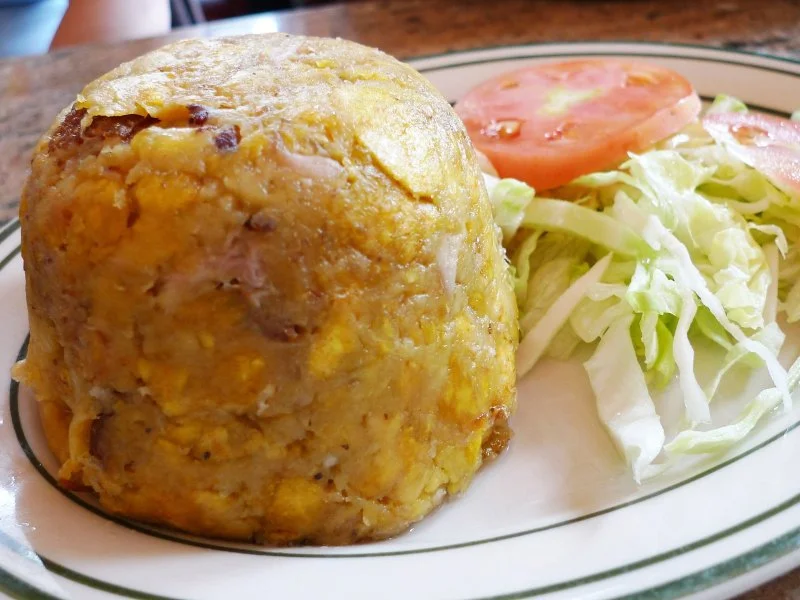
2. **Mofongo (Puerto Rico)**
- **Description**: Mofongo is a Puerto Rican dish made from fried green plantains mashed with garlic, olive oil, and pork cracklings.
- **Recipe**: Fry sliced green plantains until golden. Mash with garlic, olive oil, and pork cracklings. Shape into balls or serve as a side dish.
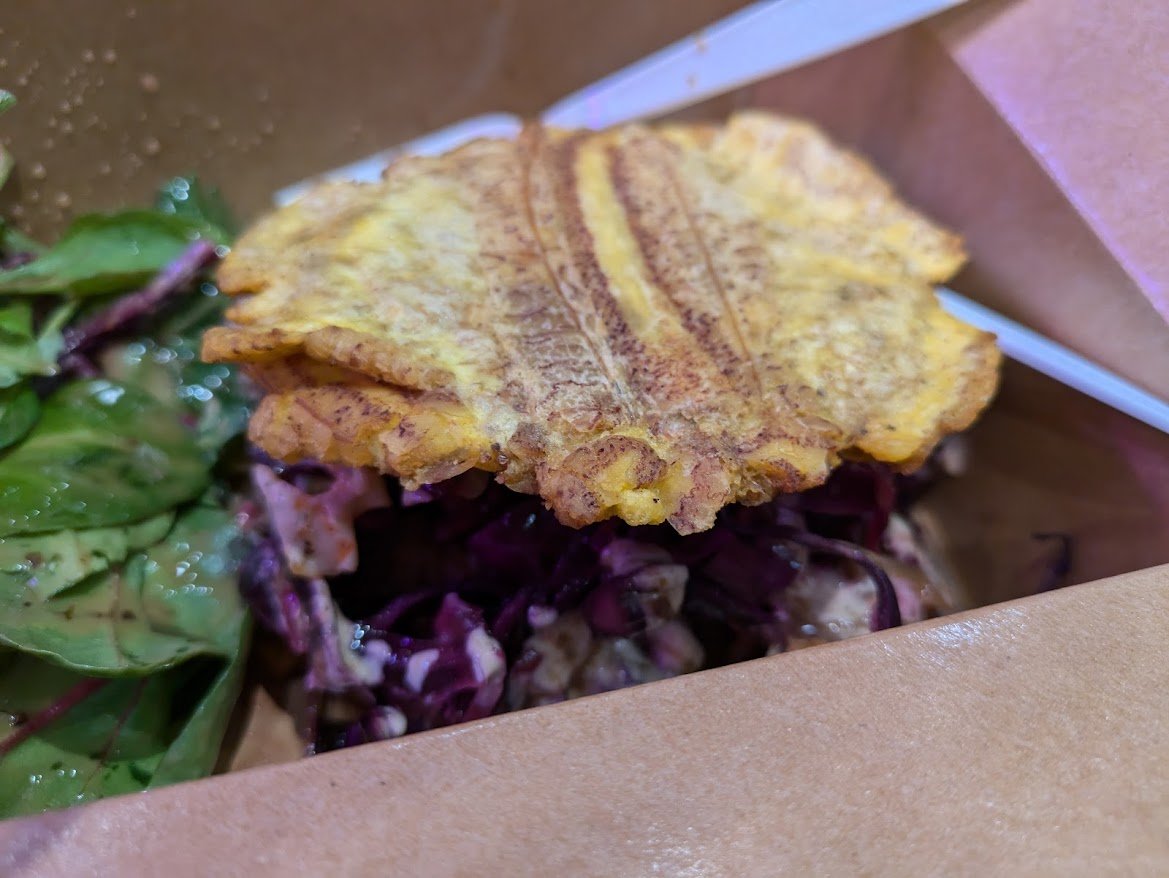
3. **Bannan Peze (Haiti)**
- **Description**: Bannan Peze refers to twice-fried plantains that are crispy on the outside and tender on the inside.
- **Recipe**: Slice green plantains and fry until golden. Flatten each slice and fry again until crispy. Season with salt.
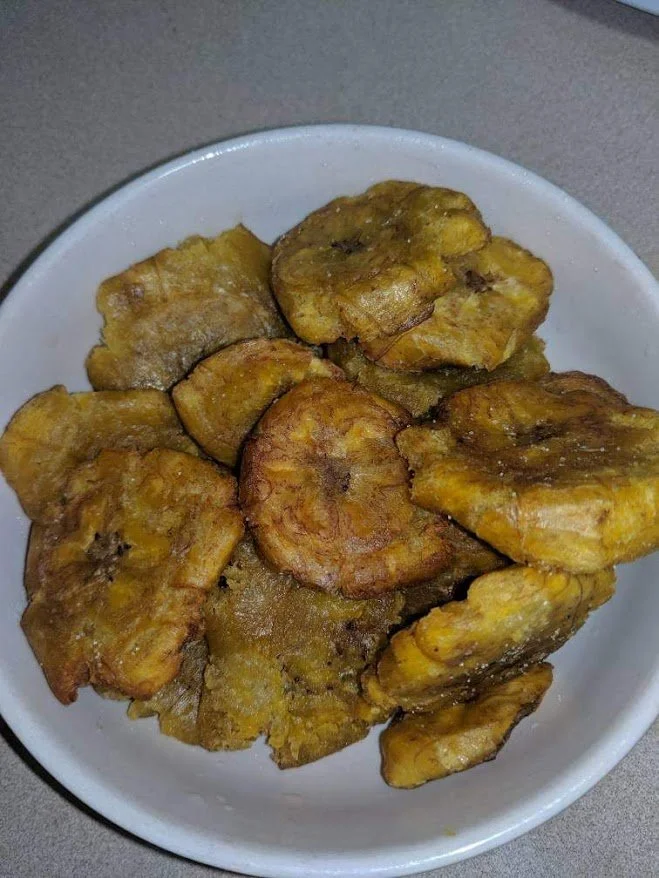
4. **Tostones (Latin America)**
- **Description**: Tostones are popular in many Latin American countries, consisting of twice-fried green plantain slices.
- **Recipe**: Slice plantains into rounds, fry until golden, flatten, then fry again until crispy. Sprinkle with salt.
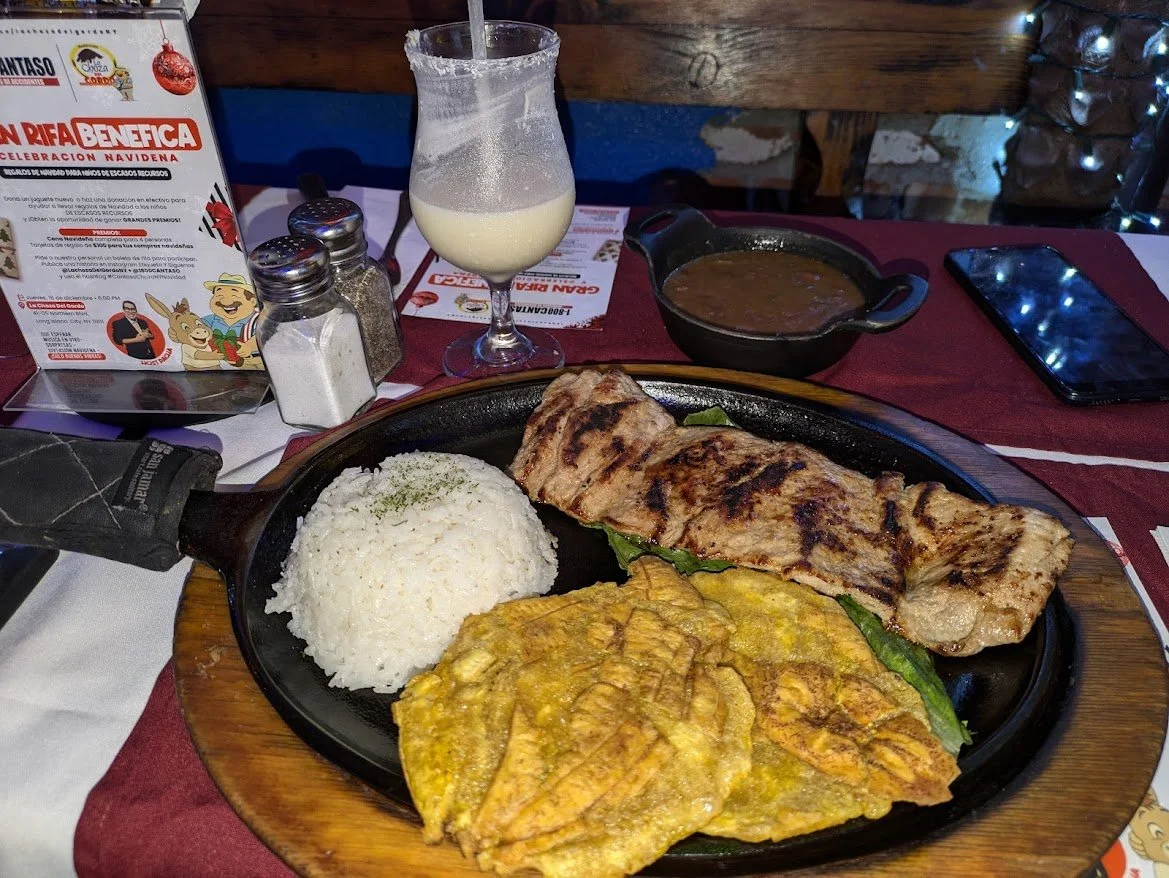
My delicious 2k25 XMAS Dining Experience @ at a Columbian restaurant
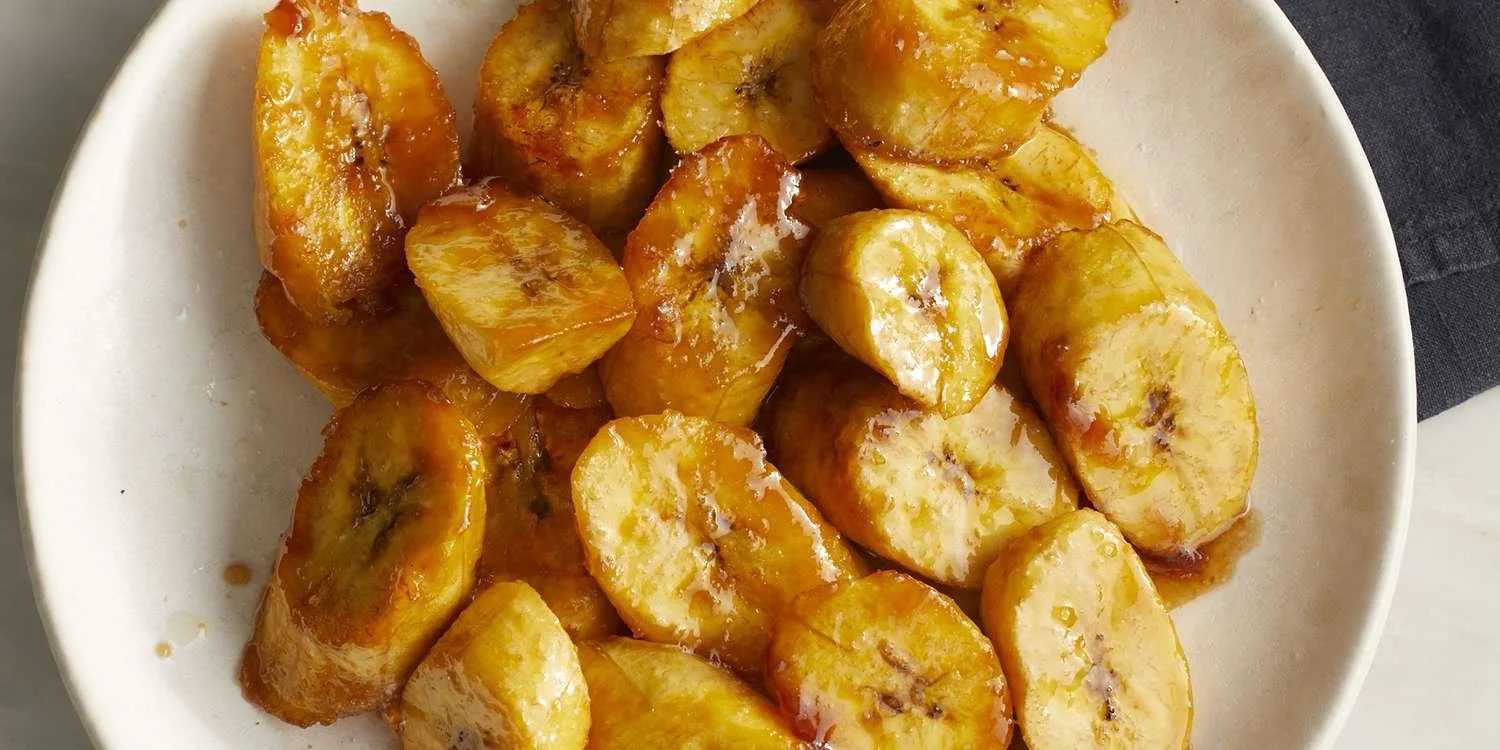
5. **Platanos Maduros (Caribbean)**
- **Description**: Ripe plantains are fried until caramelized, offering a sweet contrast to savory dishes.
- **Recipe**: Slice ripe plantains diagonally and fry in oil until golden brown. Serve as a side dish or dessert.
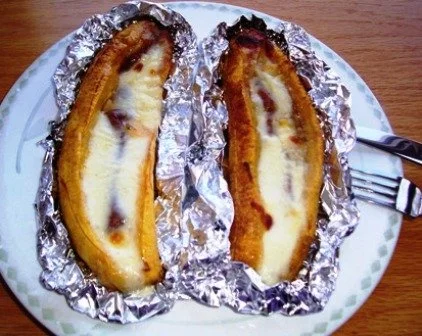
6. **Baked Plantains with Guava and Cheese (Colombia)**
- **Description**: A Colombian favorite that combines sweet baked plantains with guava paste and cheese for a delightful dessert or side dish.
- **Recipe**: Bake ripe plantains until soft, stuff with guava paste and cheese slices, then bake again until melted.
These recipes not only provide a taste of diverse cultures but also celebrate the shared heritage that connects communities across continents through food.
Going Back To the MotherLand!
Little Senegal, Harlem: Plantains on My Plate
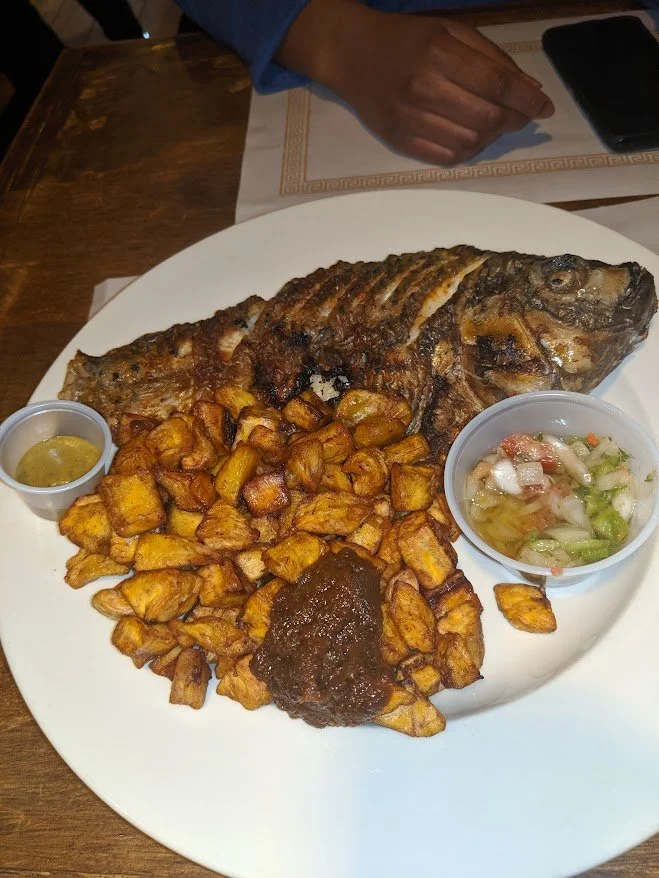
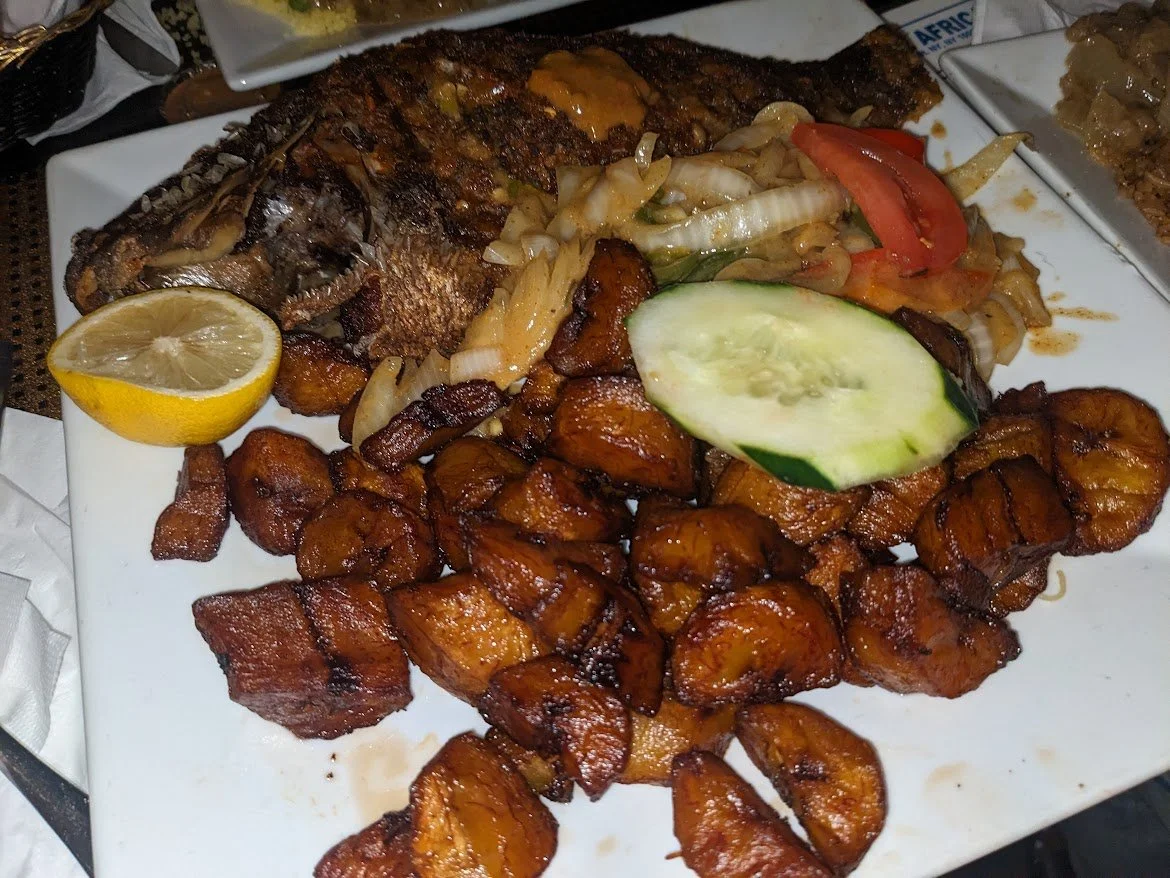
My understanding of plantains isn’t just academic—it’s deeply personal and very New York. On 116th Street in Harlem, in the heart of Little Senegal, I fell in love with a dish that still makes me smile just thinking about it: poisson brase (grilled fish).
Over the years, I’ve gone back again and again to two West African restaurants, literally right next door to each other, and ordered that same grilled fish plate. Alongside the beautifully seasoned, charred fish, they always brought me diced plantain—soft, sweet, caramelized in places. It wasn’t the classic long slices of maduros I grew up seeing; it was cut into little cubes, almost like golden jewels, dotting the plate.
Those plantain cubes were a quiet bridge: West African flavors in a Harlem restaurant, speaking fluently to my Caribbean palate. The way they were cooked—sweet, tender, with edges just kissed by the pan—made me think of home, of Sunday dinners, of the way plantain signals comfort no matter what flag is flying outside.
Did You Know? Plantain in West African Fufu
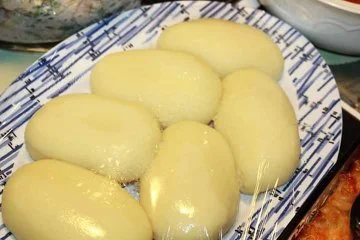
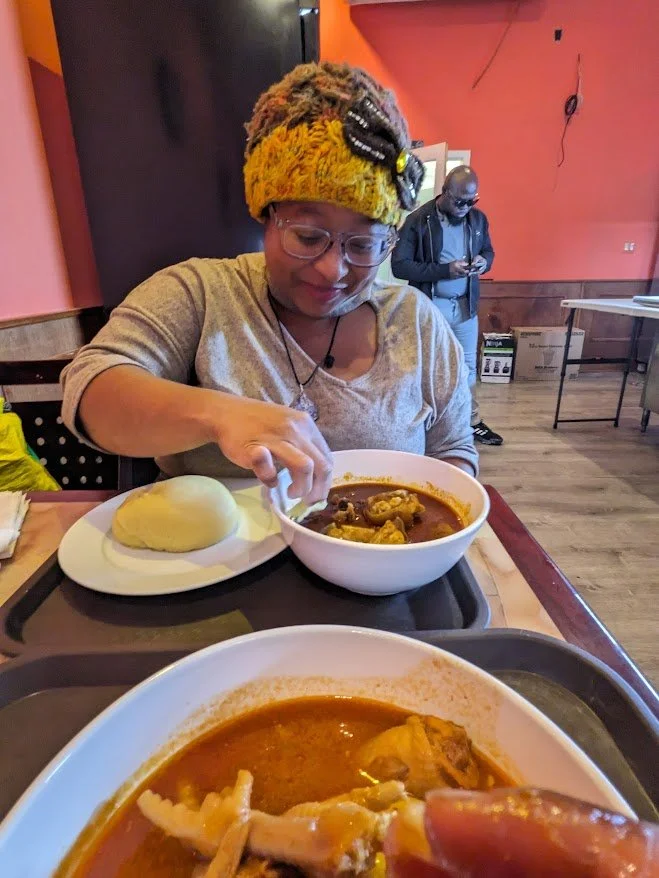
When we think of plantains in the diaspora, we often go straight to fried snacks, tostones, or sweet maduros. But in parts of West Africa, plantains are also part of the “heavy food” that anchors the plate—fufu.
In some regions, fufu isn’t made from just one starch. It can be a blend of cassava, yam, and plantain. Green or semi-ripe plantains are boiled, pounded, or processed and then combined with other starches to form a smooth, stretchy dough-like side that’s eaten with stews and soups.
I love this detail because it shows plantain not just as a side dish, but as a foundation food—a building block of the meal, just like it is in the Caribbean and Latin America. When we see mashed, pounded, or boiled plantain on a Caribbean plate, it’s not a random invention; it’s an echo of West African food technology and comfort
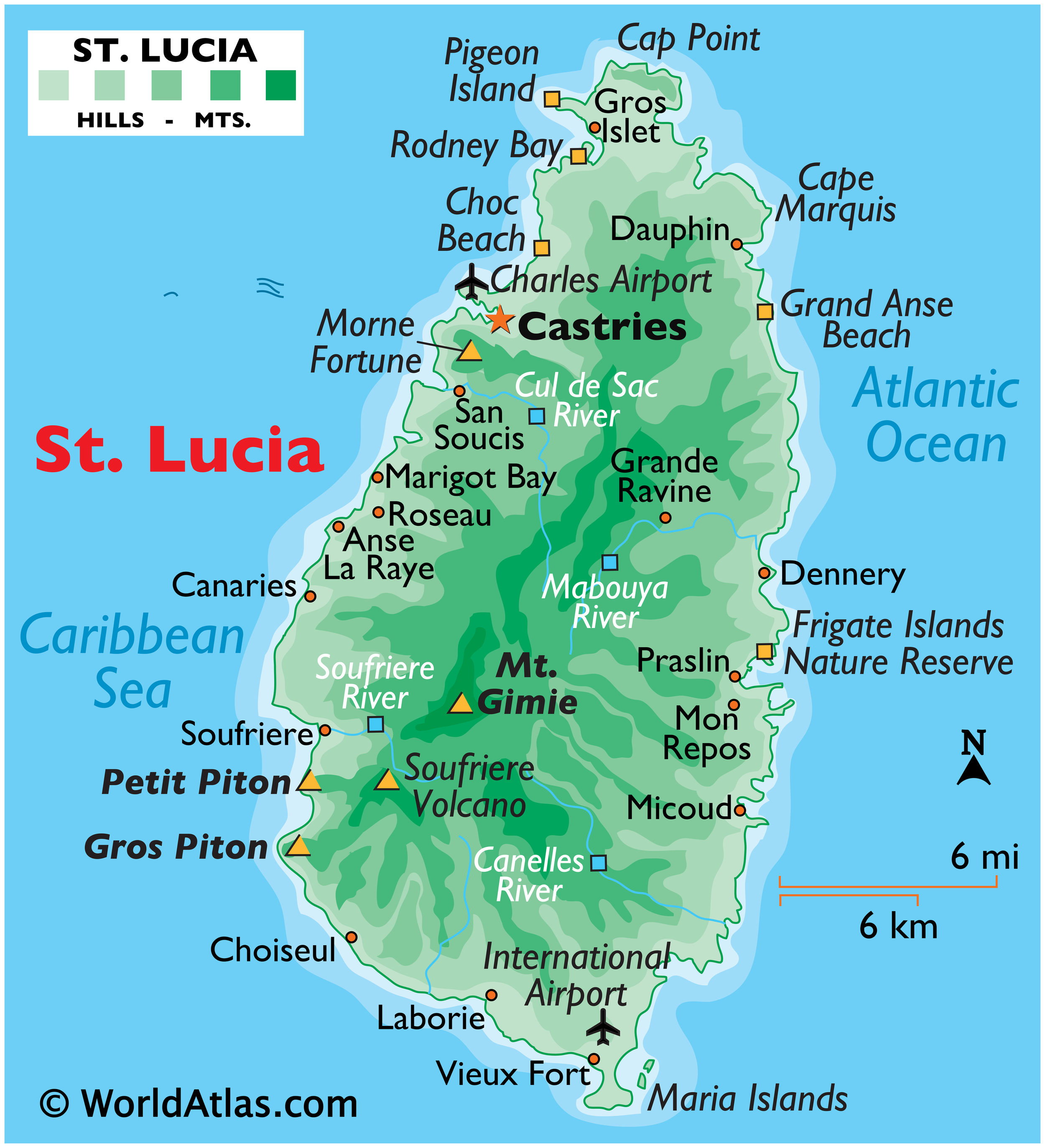
Saint Lucia
Back in 2011, I had a culinary experience I’ll never forget—one that completely changed my perspective on Caribbean food! I was staying at a relative’s house, and his partner surprised us all by prepping several pans of homemade dishes for the week. Her thoughtful gesture meant there was always something delicious on hand—and one day, while exploring this flavorful smorgasbord, I stumbled onto a lone pan with something I’d never seen before.
Curious (and always adventurous), I gave it a try. The dish looked a bit like potato salad—creamy, chopped, and inviting—but with a taste that was truly captivating. From the very first bite, I was taken on a journey my tastebuds still remember to this day. “Tasty” doesn’t even begin to describe it; invigorating, savory, and outright addictive is more like it!
But here’s the twist: I was puzzled by the name. In the US, “fig” usually means the sweet fruit you find in Fig Newton bars. I kept thinking, “This isn’t a fig—it tastes like bananas!” Turns out, in St. Lucia and much of the Caribbean, “green fig” is actually the local term for unripe, green bananas. Before the rise of AI and recipe blogs, I had to figure this out the old-fashioned way—by taste, conversation, and observation.
Green Fig Pie is just one take on the island’s beloved “green fig” dishes. It typically features boiled green bananas (called figs), chopped and baked in a creamy, cheese-rich casserole with local spices and herbs. The result is hearty, nourishing, and a real staple of St. Lucian kitchens. The island’s national pride—Green Fig and Saltfish—is another must-try.
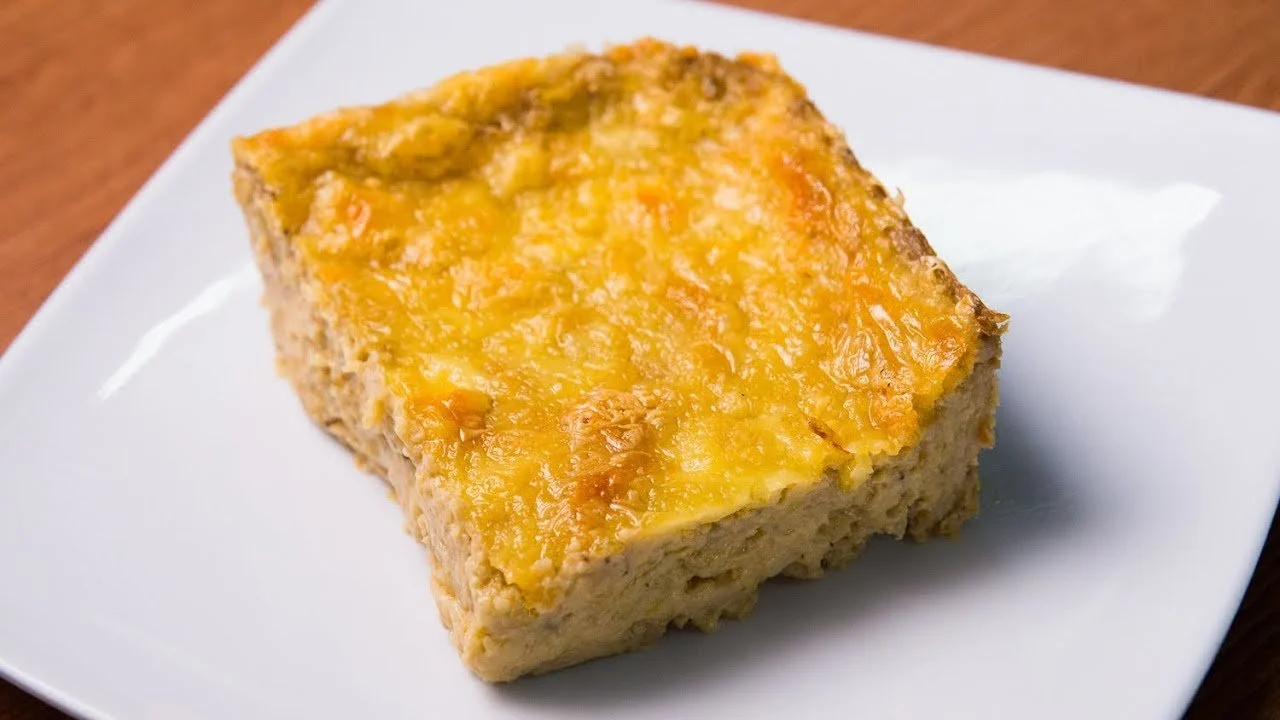
For anyone used to American figs, this dish is an introduction not just to a new flavor, but to the linguistic and cultural twists that make Caribbean cuisine so wonderfully unique. It’s a reminder that a simple pan of food can open your mind (and palate) to new adventures!
You know, my earliest experiences with green bananas were always pretty simple—served whole, almost solo, usually alongside classic Jamaican dishes like ackee and saltfish. Funny enough, Jamaica almost always pairs green bananas right next to salted fish, just as St. Lucia does in their beloved national dish! But I’d never seen green bananas chopped and baked inside a casserole like that St. Lucian Green Fig Pie. That discovery really got me thinking.
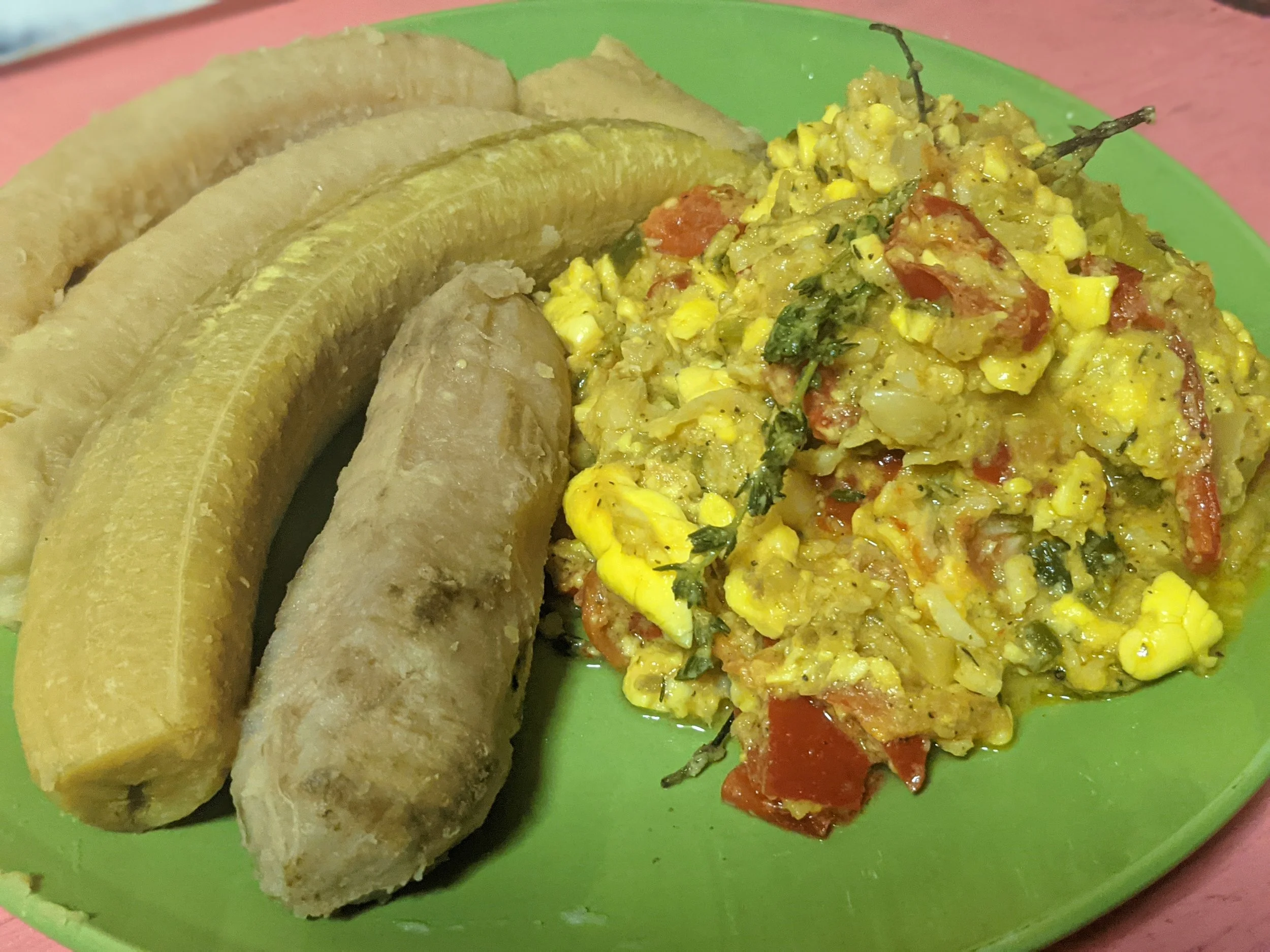
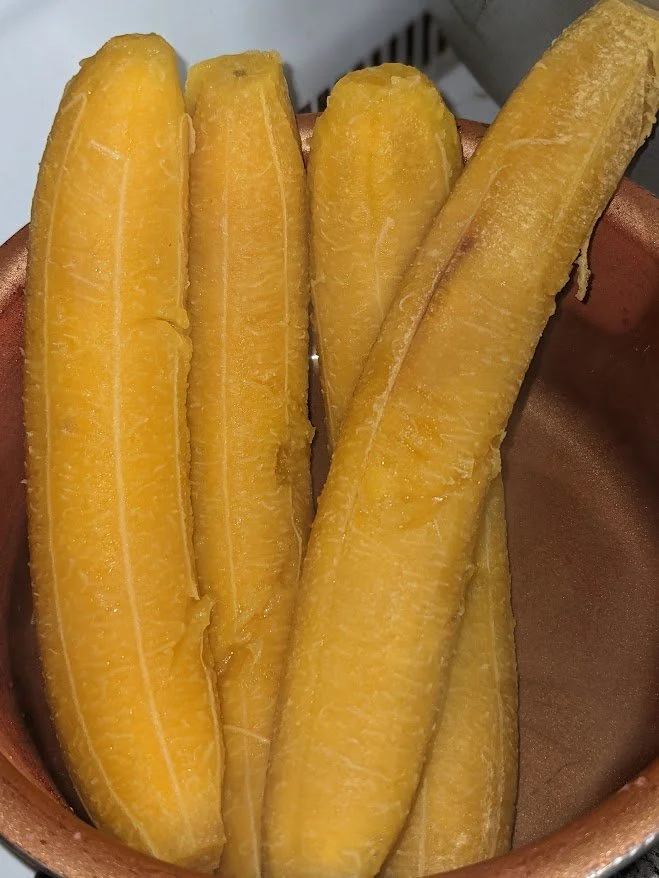
Maybe part of the reason I loved the St. Lucia dish so much is that it brought me right back to my memories of Jamaican breakfasts. There’s a beautiful symmetry here that’s almost poetic: both countries celebrate **saltfish and provision** (boiled root vegetables, green bananas, etc.) as the foundation of their national dishes. Isn’t it kind of hilarious (and heartwarming) how similar we really are? Sometimes I just want to break into song—“We are family!” Because truly, as a kid, I was obsessed with green bananas. I would go to the Jamaican restaurants and literally just ask for heaps and heaps of green bananas, nothing else!
Green bananas always fascinated me. I loved their subtle, almost wet texture—they weren’t super sweet, really not sweet at all. That made them unique: not like a dessert, but something delicate, savory, and completely different from boiled plantain (which is starchier and harder by far). To me, green bananas offered a little taste of home, of comfort, and of Caribbean unity.
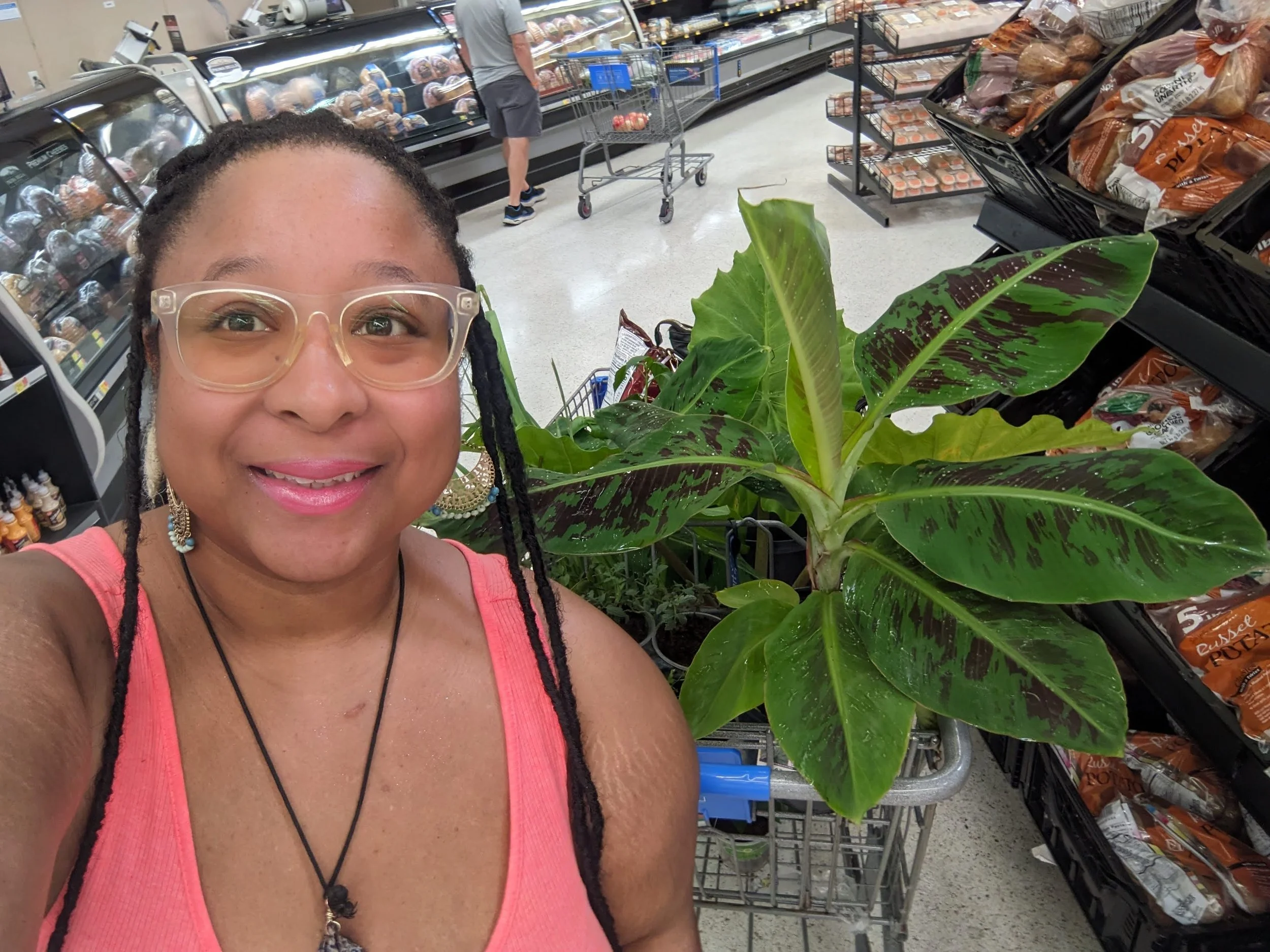
Me with my Dwarf Banana Tree in Walmart
In the photos on this blog, you’ll see me standing happily among banana and plantain trees in Florida, where they grow abundantly. I’ve even bought dwarf banana plants from Walmart multiple times and kept them out on the balcony when I lived in South Florida—one on each balcony, like my own little plantain-banana guardians. Seeing those leaves every day felt like living inside the story I tell: that these plants follow us wherever we go and make every place feel a little more like home.
So now, tasting St. Lucia’s Green Fig Pie, I understand the connection—it’s a cousin to the foods I grew up loving. Our differences and similarities unite us, mile by mile, bite by bite.
Have you ever tried green bananas either the Jamaican way or in St. Lucian pie? Hit reply and share your food memories—let’s keep celebrating our Caribbean “family!”
Hungry for heritage,
Chef Ayana
Ever had a dish where the name surprised you? Reply and let me know—I love hearing about your culinary discoveries.
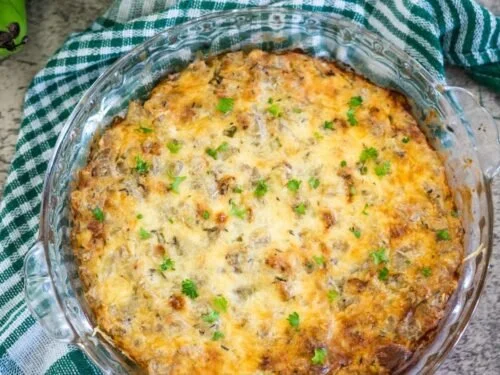
Recipe Snapshot: St. Lucia Green Fig Pie
- Boil green bananas (“figs”), chop, and mix with sautéed onion, garlic, chives, thyme, eggs, cream, and cheddar cheese.
- Bake until golden and bubbly—then serve warm and savor!
In conclusion, Plantains and Bananas offer a delicious way to explore the culinary traditions of the African diaspora. Whether fried, boiled, or baked, their versatility makes them a beloved ingredient across cultures. By trying these recipes at home, you can experience the rich flavors and historical significance of this remarkable fruit.